
This guy was clearly not a fan of either grammar lessons or his grammar teacher at school. Shame really; a bit more concentration in class could well have prevented him from looking like a prize idiot in front of all his Facebook friends… go Mrs. Johanson!
 Online proofreaders

5 Complicated Punctuation Marks Explained in One Simple Picture
Punctuation marks are pretty complicated and getting your head around them won’t happen overnight. One of the most common uses of many punctuation marks is to give the reader an indication of when they should pause or take a breath. However, such pauses need to be managed carefully: you certainly do not want to leave your reader hyperventilating after a continual stream of shallow breaths forced by over-punctuation. Nor do you want them to be gasping for breath at the end of a long sentence that completely omits any punctuation marks.
It is also important that you use the right punctuation mark to correspond with the length of pause that the sentence requires. Here’s a quick overview of five punctuation marks that can be used to denote pauses, together with their corresponding duration of pause.
If you think you could benefit from more help with your punctuation, take a look at our free punctuation cheat sheet.
Quite Possibly the Worst Letter Ever Sent From a School Teacher
This letter was sent from none other than the Director of Curriculum from a city public school in Alabama. Full of unnecessary quotation marks, spelling mistakes, and absolutely appalling sentence structure, this must be one of the worst letters ever sent from a teacher to the pupils’ parents in the history of formal educational establishments.
He may have been shedding tears of joy, we are shedding tears of dismay!
When to Capitalize: A Free Printable Cheat Sheet
 Knowing when to capitalize and the basic rules of capitalization does not come easily to anyone, and if you find that you are never quite sure which words should start with a capital letter and which should not, don’t worry, you are certainly not alone. Approximately 80% of the documents that are submitted for our editing and proofreading service contain at least one capitalization error, so it is pretty clear that those pesky capital letters confuse even the smartest people.
To help you, we have put together a capitalization cheat sheet that should give you an idea of when to capitalize. It contains a list of the common situations within which you should, and should not, start a given word with a capital letter. It’s free to print out and keep… so now you have no excuses!
13 Extremely Unfortunate Abbreviations That You Couldn’t Show Your Mother
The English language is being increasingly condensed; sometimes it is appropriate, most of the time it isn’t. Here are 13 occasions when the human tendency to condense words resulted in extremely unfortunate abbreviations, for which we are extremely grateful.
As usual with these things, the contents of some of these pictures are not for the easily offended… the clue’s in the title.
Need help with your written English? Take a look at our proofreading services.
10 Words That You May Think You Know the Meaning of, But Probably Don’t
 Editors and proofreaders can be pretty annoying, and their tendency to point out the slightest error in your written English can really grind. You only need to take a quick look at many of the blogs that are published online to see that your written English is better than most. In fact, sometimes you may actually purposefully break the rules of grammar; that’s fine. However, breaking the rules of grammar and vocabulary by mistake is not, and if you use words incorrectly then you just look plain old dumb.
Here are ten words that are commonly completely misused. Familiarize yourself with them and do us all a favor and use them correctly for a change.

Ironic

Top 7 Made-Up Words Found in Everyday Language
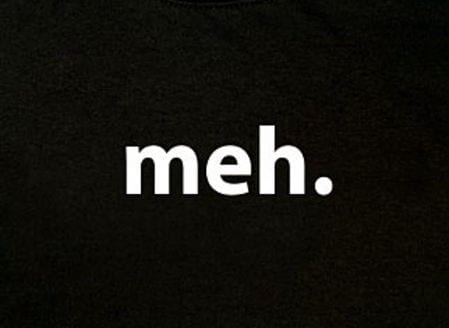 The English language is under serious threat from people who like to use made-up words that don’t really exist or who use words they don’t know the real meaning of.
The following seven words are completely made-up items of vocabulary that have crept into the English language and are misused on a very regular basis.
Dependent and Independent Clauses
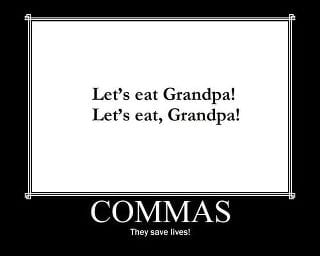 This article takes a look at dependent and independent clauses, give you tips on how you can identify them, and explains why understanding what they are is important for correct punctuation.
A clause is a group of words that contains both a subject (a noun or noun phrase) and a predicate (a simple verb or compound verb phrase, along with any objects
complementing the verb). There are two types of clauses: independent and dependent. Independent clauses are also referred to as main clauses, and dependent clauses are also known as a subordinate or relative clauses.
Is the Word “It” a Noun?
In this quick article, we answer the question, is the word “it” a noun? We also review what nouns are and investigate the circumstances in which the word “it” may be construed as a noun. Before answering the question “is the word ‘it’ a noun?”, it is worth taking a look at the difference between … Read more
How to Identify Prepositions and Prepositional Phrases
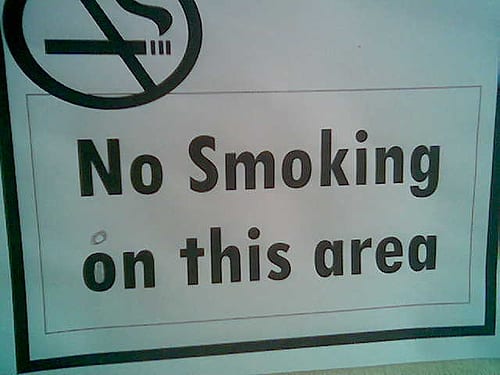 Prepositions and prepositional phrases are important elements of written English because they present a method by which a writer can show relationships between different ideas and make their communications more exact and specific.
In this article, we show you a really simple method for identifying prepositions and prepositional phrases.
What Are Phrases in a Sentence?
 What are phrases and are they actually important?
Phrases are a group of words that work together to communicate an element of speech. They are very important because they allow you to communicate better, through both written and spoken language. This article takes a look at phrases in a sentence and uses simple language to explain what phrases are, how they work within sentences to create a meaningful message and what different types of phrases are used in the English language.
There is a Difference Between the Words Use and Utilize and you Really Should Know It
[vc_row][vc_column][vc_column_text] Did you know that there is a distinct difference between the words “use” and “utilize”? If you do, that’s a bit of a surprise because very few people recognize that the words use and utilize have two completely different meanings. In fact they are two of the most common mistakes in English we come across.
In practice, the word utilize is probably one of the most misunderstood words out there and it is important that you are able to understand why it cannot be used interchangeably for the word use.
In this article, we take a close look at use and utilize, explain the differences between the two words, and give you practical tips to ensure that you never use either of them incorrectly again.
What Not to Write on a Resume: 8 Statements You Should Avoid
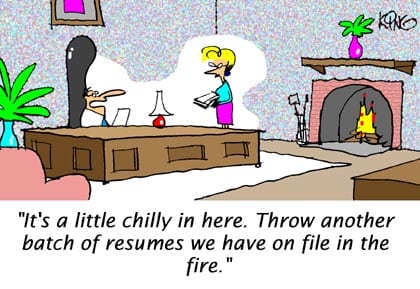 Understanding what not to write on a resume requires analyzing if what you are saying actually makes sense. The majority of people write resumes that are full of stock phrases and high-level claims that mean absolutely nothing to the average recruiter. If you want your resume to be read and, more importantly, you’re looking for an interview, you need to make sure that it stands out from the rest and steers clearly away from empty clichés and meaningless jargon. It does happen: take a look at these funny cover letters.
Here’s my take on what not to write on a resume:
Someone or Some One: What’s the Difference?
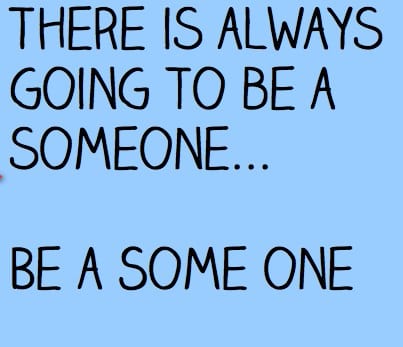 Someone or some one? Are they actually different from one another and does the term “some one” actually exist?
In this article, we take a look at these commonly confused words and reveal that, despite what many people say, there is such a term as “some one.”
[Infographic] Hyphen Use: Hyphenation Rules
 When it comes to hyphen use, many writers purposely choose to entirely omit this dreaded punctuation mark in fear of using it incorrectly.
The truth is this: hyphens aren’t actually that complicated.
Once you’ve mastered some basic rules about their usage, you will find that the concepts relating to hyphen use are pretty straightforward.
Here are the basic dos and don’ts of the hyphenation rules.
[Infographic] Help For Writer’s Block: 7 Tips to Boost Your Creativity
 Do you need help for Writer’s Block?
Writer’s block is inevitable; it can happen at any point and, when it does, it’s a pretty serious problem.
There comes a time in every writer’s life when the creativity, desire, and motivation to produce an amazing piece of literature just stops dead. You know you need to keep on writing: you have a deadline to meet, your readers are waiting to read your next installment or you know Google will be shortly de-ranking your site for infrequent content. But sitting there at your desk surrounded by empty coffee cups, a few scribbled notes and a snoring dog (that may just be me), you feel about as inspired as a soggy dishrag—and potentially just as worn out and smelly.
[Infographic] Converting a Singular Noun to a Plural Noun
A plural noun is more than one person, place or thing. The majority of nouns in written English are transformed into their plural noun form through the addition of the letter “s” at the end of the word. However, this is not always the case and there are a number of rules that you should be aware of. Our free infographic provides a handy decision tree that you can use to decide how to change the singular form of a noun into the plural form. Simply start at the beginning and answer each question in turn in order to find out what the plural noun form of your word should look like.
Bear in mind, in some cases, words can be both singular and plural. You can read more in our guide to words that are both singular and plural.
If you’re looking for more practice advice on using nouns, check out our guides to concrete nouns and abstract nouns.
[Infographic] 10 Idioms About the Human Body
There are many different idioms about the human body. Our free infographic shows ten of the best in the form of that old favorite game of Operation. This free poster is yours to download, print and keep.
What Punctuation Mark Should I Use? A Free Printable Punctuation Cheat Sheet
 There may be many occasions when you are composing a written document that you have to stop and ask yourself: “what punctuation mark should I use?”
Punctuation marks can be very confusing, and there are endless lists and rules out there that dictate when you should, and should not, use them. If you are not fully confident with the rules that govern the use of punctuation marks, then our free printable punctuation cheat sheet may be just what you’re looking for. We have simplified the rules as much as possible and condensed them into a two-page cheat sheet that you can print out and refer to on a regular basis.
The Last Possible Thing You Want to Happen When You’re Berating a College Education
While news of high unemployment among university graduates is indeed rife, you would think that someone who holds the title of “staff reporter” would make absolutely, positively certain that an article berating the value of a college education was flawless—apparently not. Unfortunately for this avid reporter, the only thing this article proves is that journalists … Read more
14 Quick Tips on Business Writing That Can Make You a Copywriting Stud
No wonder you’re looking for tips on business writing. There’s a lot of responsibility on your shoulders. You need to produce copy that sells your products and services, presents your company in a professional manner, builds relationships with your customer base and attracts traffic to your website and blog—all at the same time. Where do … Read more
10 Funny Facebook Spelling Mistakes and the Responses They Deserved
 The problem with social media is that, if you fail to engage the services of a native Engish proofreader, many of your mistakes are there for the world to see. Fortunately, quite often these mistakes have hilarious consequences, as these funny Facebook spelling mistakes prove.
Warning: If you are easily offended, give this post a miss. Our post on lame excuses for Facebook mistakes is a little tamer.