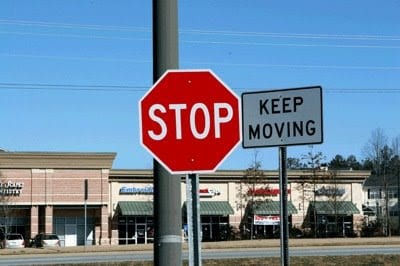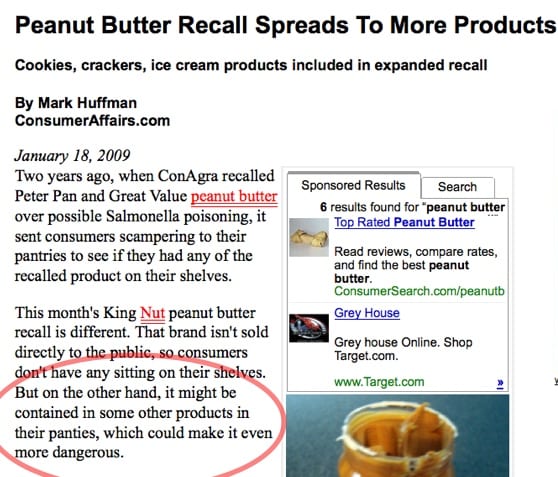
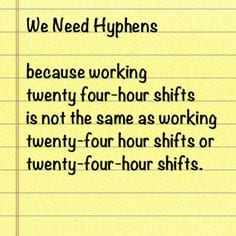
Human beings are by our very nature flawed; we are destined to make mistakes at every turn. While some proofreading errors are particularly cringeworthy, others are completely unforgivable, like these…
1.
Perhaps it’s the proximity to unidentified chemical foodstuffs that poisons the brain, or maybe the inane repetition of the same tired phrases has slowly driven them all mad. Regardless, you would think that the billions of dollars this major corporation garners from the billions of worshippers of those golden arches, that they could afford to … Read more
Human beings are by our very nature flawed; we are destined to make mistakes at every turn. While some proofreading errors are particularly cringeworthy, others are completely unforgivable, like these…
1.
It is important that you know when to use a colon, as good writing in English will usually make use of this punctuation mark. A colon consists of two dots, one above the other, and it should not be confused with the semi-colon, which looks similar but has very different uses.
There are several rules that are useful when you are learning when to use a colon.
Many people do not understand whether they should use a colon or a comma before quotation marks, to introduce direct speech. In truth, it doesn’t really matter, and if you are introducing a quotation by using words such as “he said,” “she commented,” “they asserted,” etc. using either a comma before the quotation mark or a … Read more
Many people find it difficult to understand when to use commas. Comma rules appear to be extremely complicated, and it is very easy to make mistakes when using them. In this article, we present a comprehensive list of 15 comma rules that you should know in order to master the use of commas in your writing.
The word ironic is one of the most abused words in the English language. Isn’t it ironic? Actually, no, you can learn why here: 10 words that you think you know the meaning of, but probably don’t.
One story that perfectly illustrates the true meaning of the word irony was presented during the 1994 annual Darwin Awards ceremony. The Darwin Awards commemorate individuals whose foolish and idiotic behavior leads to their own death and simultaneously protects the gene pool of the human race.
One disappointed would-be teacher just can’t believe that the Commonwealth of Massachusetts actually dared to refuse her entry to a teacher training program. It seems that she completely failed her tests for educator licensure.
I, for the life of me, cannot fathom why they would refuse such a fine literacy perfectionist. If she failed a question about chocolate, God knows how she would have fared if she had undergone a grammar test.
Failing to use a punctuation mark, using it in the wrong place, or failing to proofread is one of the most effective methods of transforming a great piece of writing into something that sucks.
These absolutely delightful examples of the way in which punctuation can completely change the meaning of an intended message, are cringeworthy, but brilliant. These guys deserve medals for turning otherwise dull and mundane signs into something that we can all have a laugh at. Editing and proofreading really does matter!
If you love nothing better than a laugh at other people’s mistakes, look no further than the world’s largest social network. Some of these people haven’t actually made a mistake, though; it seems they have an excuse for their esteemed ignoramus status. It matters not that these excuses are as ridiculous as a glow-in-the-dark toilet seat…
This guy was clearly not a fan of either grammar lessons or his grammar teacher at school. Shame really; a bit more concentration in class could well have prevented him from looking like a prize idiot in front of all his Facebook friends… go Mrs. Johanson!
Punctuation marks are pretty complicated and getting your head around them won’t happen overnight. One of the most common uses of many punctuation marks is to give the reader an indication of when they should pause or take a breath. However, such pauses need to be managed carefully: you certainly do not want to leave your reader hyperventilating after a continual stream of shallow breaths forced by over-punctuation. Nor do you want them to be gasping for breath at the end of a long sentence that completely omits any punctuation marks.
It is also important that you use the right punctuation mark to correspond with the length of pause that the sentence requires. Here’s a quick overview of five punctuation marks that can be used to denote pauses, together with their corresponding duration of pause.
If you think you could benefit from more help with your punctuation, take a look at our free punctuation cheat sheet.
This letter was sent from none other than the Director of Curriculum from a city public school in Alabama. Full of unnecessary quotation marks, spelling mistakes, and absolutely appalling sentence structure, this must be one of the worst letters ever sent from a teacher to the pupils’ parents in the history of formal educational establishments.
He may have been shedding tears of joy, we are shedding tears of dismay!
Knowing when to capitalize and the basic rules of capitalization does not come easily to anyone, and if you find that you are never quite sure which words should start with a capital letter and which should not, don’t worry, you are certainly not alone. Approximately 80% of the documents that are submitted for our editing and proofreading service contain at least one capitalization error, so it is pretty clear that those pesky capital letters confuse even the smartest people.
To help you, we have put together a capitalization cheat sheet that should give you an idea of when to capitalize. It contains a list of the common situations within which you should, and should not, start a given word with a capital letter. It’s free to print out and keep… so now you have no excuses!
The English language is being increasingly condensed; sometimes it is appropriate, most of the time it isn’t. Here are 13 occasions when the human tendency to condense words resulted in extremely unfortunate abbreviations, for which we are extremely grateful.
As usual with these things, the contents of some of these pictures are not for the easily offended… the clue’s in the title.
Need help with your written English? Take a look at our proofreading services.

Editors and proofreaders can be pretty annoying, and their tendency to point out the slightest error in your written English can really grind. You only need to take a quick look at many of the blogs that are published online to see that your written English is better than most. In fact, sometimes you may actually purposefully break the rules of grammar; that’s fine. However, breaking the rules of grammar and vocabulary by mistake is not, and if you use words incorrectly then you just look plain old dumb.
Here are ten words that are commonly completely misused. Familiarize yourself with them and do us all a favor and use them correctly for a change.

The English language is under serious threat from people who like to use made-up words that don’t really exist or who use words they don’t know the real meaning of.
The following seven words are completely made-up items of vocabulary that have crept into the English language and are misused on a very regular basis.
This article takes a look at dependent and independent clauses, give you tips on how you can identify them, and explains why understanding what they are is important for correct punctuation.
A clause is a group of words that contains both a subject (a noun or noun phrase) and a predicate (a simple verb or compound verb phrase, along with any objects
complementing the verb). There are two types of clauses: independent and dependent. Independent clauses are also referred to as main clauses, and dependent clauses are also known as a subordinate or relative clauses.
In this quick article, we answer the question, is the word “it” a noun? We also review what nouns are and investigate the circumstances in which the word “it” may be construed as a noun. Before answering the question “is the word ‘it’ a noun?”, it is worth taking a look at the difference between … Read more
Prepositions and prepositional phrases are important elements of written English because they present a method by which a writer can show relationships between different ideas and make their communications more exact and specific.
In this article, we show you a really simple method for identifying prepositions and prepositional phrases.
What are phrases and are they actually important?
Phrases are a group of words that work together to communicate an element of speech. They are very important because they allow you to communicate better, through both written and spoken language. This article takes a look at phrases in a sentence and uses simple language to explain what phrases are, how they work within sentences to create a meaningful message and what different types of phrases are used in the English language.
[vc_row][vc_column][vc_column_text]
Did you know that there is a distinct difference between the words “use” and “utilize”? If you do, that’s a bit of a surprise because very few people recognize that the words use and utilize have two completely different meanings. In fact they are two of the most common mistakes in English we come across.
In practice, the word utilize is probably one of the most misunderstood words out there and it is important that you are able to understand why it cannot be used interchangeably for the word use.
In this article, we take a close look at use and utilize, explain the differences between the two words, and give you practical tips to ensure that you never use either of them incorrectly again.
Understanding what not to write on a resume requires analyzing if what you are saying actually makes sense. The majority of people write resumes that are full of stock phrases and high-level claims that mean absolutely nothing to the average recruiter. If you want your resume to be read and, more importantly, you’re looking for an interview, you need to make sure that it stands out from the rest and steers clearly away from empty clichés and meaningless jargon. It does happen: take a look at these funny cover letters.
Here’s my take on what not to write on a resume: