Figurative Language for Kids: A Super Simple Guide to Tricky Literary Devices

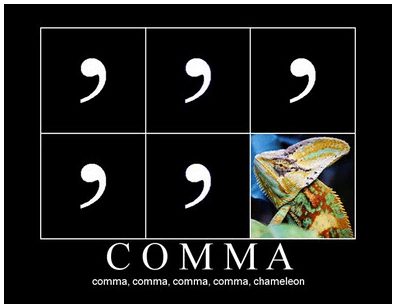
Welcome to the world of figurative language for kids (with a smiley twist!) Figurative language is a fun way to make your writing more exciting, colourful, and creative. Instead of saying exactly what you mean, you get to play with words—comparing, exaggerating, and expressing ideas in ways that make people smile, giggle, or go “ooh, … Read more

New Vappingo Platform Launching Soon

Let’s start afresh! When Vappingo first launched back in 2009, things were a little different. Blackberries were all the rage, NetFlix was primarily a DVD delivery company, MySpace was still popular, and sixteen-year-old Miley Cyrus was better known for playing Hannah Montana than she was for twerking. Yep, the world has moved on somewhat since Vappingo’s … Read more

When to Hyphenate Numbers

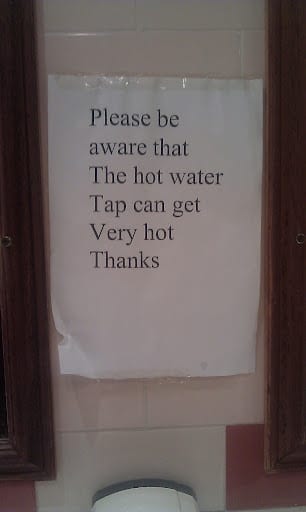
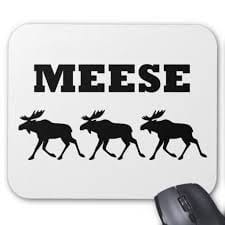
Why we need hyphens in numbersKnowing when to hyphenate numbers is important because the correct use of the hyphen helps your reader to understand which numbers are part of a given adjective and avoids any ambiguity.

Let’s look at the example on the left.

Is the guy working twenty shifts that are each four hours long, twenty-four shifts that are each an hour long? Or shifts that last twenty-four hours in total?

As you can see, where you place the hyphen in the number can make a significant difference to the meaning of the sentence.

Read more

101 Words That are Both Plural and Singular

Plural of moose?


The majority of nouns have distinct plural and singular forms. However, there are a number of special words that are spelt and pronounced exactly the same way in both their singular and plural forms. Here are 101 words that are both singular and plural.

If you are not sure how to convert a singular noun into a plural noun, check out our guide to how to convert a singular noun to a plural noun.

Read more

The Difference Between Eg and Ie

Do you know when to use e.g. or i.e.? E.g. and i.e. mistakes are spotted on a regular basis by our proofreading team. In this article we take a look at the differences between the two latin abbreviations and explore how they can be used correctly in written English. Have you ever seen a sentence … Read more

86 Great Examples of Portmanteau


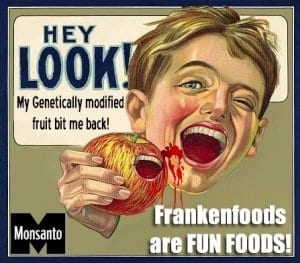
Portmanteau Frankenfood

A portmanteau is a word that is formed by combining two different terms to create a new entity. Through blending the sounds and meanings of two existing words, a portmanteau creates a new expression that is a linguistic blend of the two individual terms.

For example breathalyzer is the portmanteau word formed from combining breath and analyzer, while blog is derived from the source words web and log.

P.S. If you are interested in portmanteau lists, you may also find our examples of hyperbole useful.

Read more

54 Great Examples of Modern-Day Neologisms

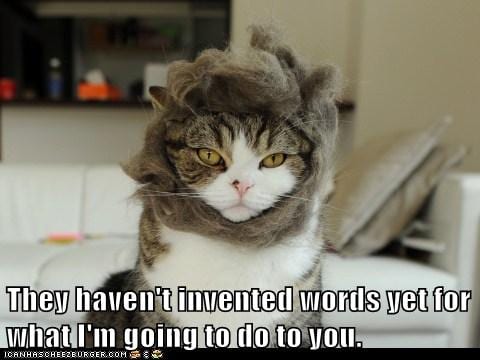
Sign reads: "they haven't invented words yet for what I will do to you"
Neologisms are newly coined terms, words, or phrases, that may be commonly used in everyday life but have yet to be formally accepted as constituting mainstream language. Neologisms represent the evolving nature of the English language. Over time people create new words that express concepts or ideas that were previously expressed using other words or use words that may not have existed at all. Neologisms can be completely new words, new meanings for existing words or new semes in existing words. Here are some examples of neologisms that are finding their way into modern-day English language.

Read more

64 Examples of Oxymorons in Sentences

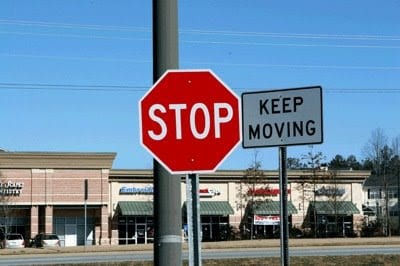
Oxymoron signs placed side by side

Oxymorons are figures of speech in which two contradictory terms are combined in order to create a rhetorical effect by paradoxical means. The word oxymoron is derived from the Greek for pointedly foolish (oxys = sharp/keen and moros = foolish). Oxymorons are extremely useful in written English because they can make effective titles, add dramatic effect, add flavor to speech, and can sometimes be used to achieve a comedic effect.

Here is a comprehensive list of 64 examples of oxymorons in sentences. In each example, the oxymoron is underlined.

Before you start, if you’re looking for a super simple guide to literary devices, take a look at our Figurative Language for Kids

Do you need help refining your written English? Take a look at our proofreading services.

Read more

Five Types of Phrases: A Free Printable Cheat Sheet

It is generally accepted that there are five major types of phrases in the English language, one for each of the main parts of speech. Phrases are a group of words that act as a part of a speech but cannot stand alone in order to form a complete sentence because they do not include both a subject and a predicate. You can find out more about phrases in our guide to phrases. Our free printable cheat sheet presents the five major types of phrases together with information about how to spot them and what punctuation rules you should bear in mind when using them. To download a free copy of the Five Types of Phrases cheat sheet, simply click on the image below.

Read more

When is it Okay to Use Contractions in Formal Writing?

Many people avoid using contractions in formal writing because they are under the impression that contractions are only appropriate for casual writing and that they constitute non-standard grammar. Are they really representative of sloppy writing? When is it okay to use contractions? Many automatic grammar-checking software packages will produce an error if you use a … Read more

When to Indent Paragraphs

Questions about when to indent paragraphs may constitute typographic minutia, but getting it right is important nonetheless, especially if you intend to produce writing that will be professionally published. Many people believe that every single paragraph in a piece of text should be indented. This is actually unnecessary. You should use indentation to indicate a … Read more

When to Use a Colon: 9 Simple Rules

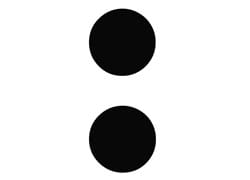
Picture of a colon punctuation markIt is important that you know when to use a colon, as good writing in English will usually make use of this punctuation mark. A colon consists of two dots, one above the other, and it should not be confused with the semi-colon, which looks similar but has very different uses.

There are several rules that are useful when you are learning when to use a colon.

When to use a colon: Nine Simple Rules

Read more

When to Use Commas: 15 Comma Rules Everyone Should Know

Comma rules are pretty complicatedMany people find it difficult to understand when to use commas. Comma rules appear to be extremely complicated, and it is very easy to make mistakes when using them. In this article, we present a comprehensive list of 15 comma rules that you should know in order to master the use of commas in your writing.

Read more

An Unbelievable Twist of Fate That Superbly Demonstrates the Real Meaning of the Word Irony

Ronald Opus story demonstrates the true meaning of the word ironyThe word ironic is one of the most abused words in the English language. Isn’t it ironic? Actually, no, you can learn why here: 10 words that you think you know the meaning of, but probably don’t.

One story that perfectly illustrates the true meaning of the word irony was presented during the 1994 annual Darwin Awards ceremony. The Darwin Awards commemorate individuals whose foolish and idiotic behavior leads to their own death and simultaneously protects the gene pool of the human race.

Read more

5 Complicated Punctuation Marks Explained in One Simple Picture

Punctuation marks are pretty complicated and getting your head around them won’t happen overnight. One of the most common uses of many punctuation marks is to give the reader an indication of when they should pause or take a breath. However, such pauses need to be managed carefully: you certainly do not want to leave your reader hyperventilating after a continual stream of shallow breaths forced by over-punctuation. Nor do you want them to be gasping for breath at the end of a long sentence that completely omits any punctuation marks.

It is also important that you use the right punctuation mark to correspond with the length of pause that the sentence requires. Here’s a quick overview of five punctuation marks that can be used to denote pauses, together with their corresponding duration of pause.

If you think you could benefit from more help with your punctuation, take a look at our free punctuation cheat sheet.

Read more

When to Capitalize: A Free Printable Cheat Sheet

Wondering when to use capital letters? Knowing when to capitalize and the basic rules of capitalization does not come easily to anyone, and if you find that you are never quite sure which words should start with a capital letter and which should not, don’t worry, you are certainly not alone. Approximately 80% of the documents that are submitted for our editing and proofreading service contain at least one capitalization error, so it is pretty clear that those pesky capital letters confuse even the smartest people.

To help you, we have put together a capitalization cheat sheet that should give you an idea of when to capitalize. It contains a list of the common situations within which you should, and should not, start a given word with a capital letter. It’s free to print out and keep… so now you have no excuses!

Read more

Dependent and Independent Clauses

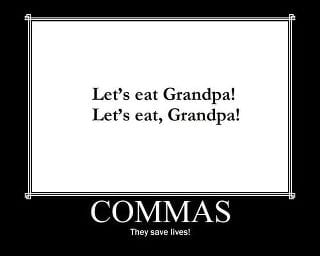
Commas change the meaning of sentencesThis article takes a look at dependent and independent clauses, give you tips on how you can identify them, and explains why understanding what they are is important for correct punctuation.

A clause is a group of words that contains both a subject (a noun or noun phrase) and a predicate (a simple verb or compound verb phrase, along with any objects
complementing the verb). There are two types of clauses: independent and dependent. Independent clauses are also referred to as main clauses, and dependent clauses are also known as a subordinate or relative clauses.

Read more

Is the Word “It” a Noun?

In this quick article, we answer the question, is the word “it” a noun? We also review what nouns are and investigate the circumstances in which the word “it” may be construed as a noun. Before answering the question “is the word ‘it’ a noun?”, it is worth taking a look at the difference between … Read more

How to Identify Prepositions and Prepositional Phrases

Sign reads: "no smoking on this area."Prepositions and prepositional phrases are important elements of written English because they present a method by which a writer can show relationships between different ideas and make their communications more exact and specific.

In this article, we show you a really simple method for identifying prepositions and prepositional phrases.

Read more

What Are Phrases in a Sentence?

What are phrases in a sentence? "It's all good."What are phrases and are they actually important?

Phrases are a group of words that work together to communicate an element of speech. They are very important because they allow you to communicate better, through both written and spoken language. This article takes a look at phrases in a sentence and uses simple language to explain what phrases are, how they work within sentences to create a meaningful message and what different types of phrases are used in the English language.

Read more

There is a Difference Between the Words Use and Utilize and you Really Should Know It

[vc_row][vc_column][vc_column_text]Is there a difference between use and utilizeDid you know that there is a distinct difference between the words “use” and “utilize”? If you do, that’s a bit of a surprise because very few people recognize that the words use and utilize have two completely different meanings. In fact they are two of the most common mistakes in English we come across.

In practice, the word utilize is probably one of the most misunderstood words out there and it is important that you are able to understand why it cannot be used interchangeably for the word use.

In this article, we take a close look at use and utilize, explain the differences between the two words, and give you practical tips to ensure that you never use either of them incorrectly again.

Read more

[Infographic] Hyphen Use: Hyphenation Rules

hyphenated versus unhyphenatedWhen it comes to hyphen use, many writers purposely choose to entirely omit this dreaded punctuation mark in fear of using it incorrectly.

The truth is this: hyphens aren’t actually that complicated.

Once you’ve mastered some basic rules about their usage, you will find that the concepts relating to hyphen use are pretty straightforward.

Here are the basic dos and don’ts of the hyphenation rules.

Read more