Not Sure Whether to Audit, Rewrite, or Rebuild Your KDP Listing?
A weak KDP listing does not always need a full rebuild. Learn how to identify the bottleneck and choose between diagnosis, live-listing optimization, or a fresh pre-publication listing.
The dangerous moment is not when a KDP listing looks obviously broken. It is when sales are disappointing and almost every possible fix sounds reasonable.
Change the keywords. Rewrite the description. Lower the price. Rework the subtitle. Run more ads. Build the whole thing again. Each option can make sense in the right situation, which is exactly why random editing becomes so tempting.
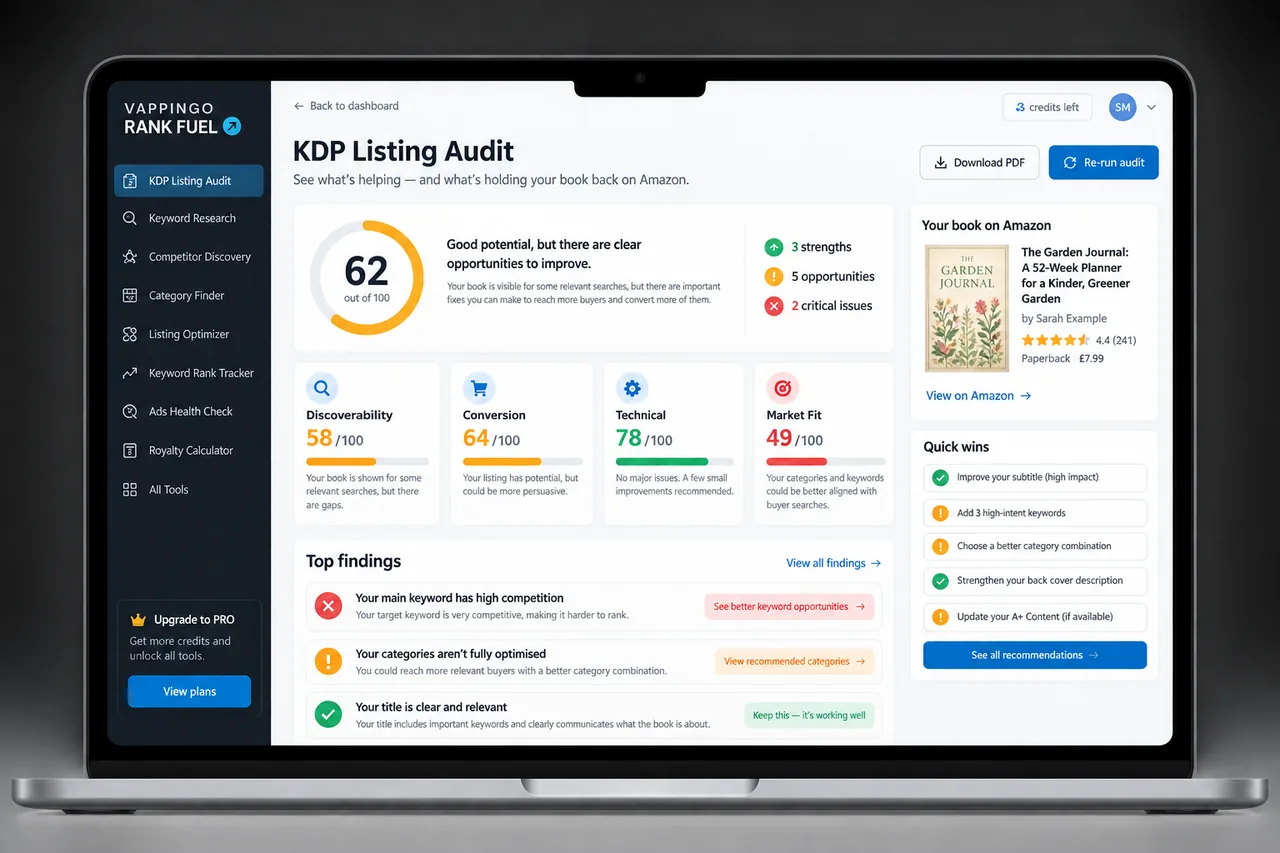
The problem is that the same symptom can come from completely different causes. Low sales can mean weak visibility, weak click-through, poor conversion, bad traffic, weak positioning or a market problem. A KDP listing audit is useful when you do not yet know which of those is true.
Before you edit, decide which job you are actually trying to do: diagnose the bottleneck, improve a live listing that mostly works, or rebuild a listing whose strategy is wrong from the ground up. Choosing the path first protects you from fixing the wrong problem faster.
The Quick Answer: Audit First if You Do Not Know the Bottleneck
If you do not know what is wrong yet, start with diagnosis. If you already know the weak part of a live listing, improve that part. If the whole listing is built around the wrong buyer, search intent or positioning, rebuild it.
- Use a listing audit when you do not know what is wrong yet.
- Use a listing optimizer when the book is already live and the listing needs stronger copy, clearer positioning, or better conversion.
- Use a listing generator when the book is not published yet, or when the existing listing is so weak that it needs to be rebuilt from the ground up.
The mistake is skipping the diagnosis because rewriting feels more productive. If the real problem is weak traffic, a better description may change nothing. If the problem is conversion, more keywords may simply send more people to a page that still does not persuade. Match the fix to the bottleneck.
A KDP listing can fail at visibility, click-through, conversion or positioning. Those problems can produce the same disappointing sales number and still require different fixes.
Why Authors Get Stuck When a KDP Listing Is Not Working
KDP listing problems are confusing because the dashboard often shows the outcome rather than the cause. “My book is not selling” tells you what happened. It does not tell you where the buying journey broke.
Weak keywords can reduce impressions. A weak cover or title can reduce clicks. A poor description can lose the sale after the click. Bad category fit can place the book beside the wrong competitors. Poor ad targeting can create traffic that was never likely to convert. The symptom overlaps; the causes do not.
That is why the first useful question is not What should I rewrite? It is Where is the buying journey breaking?
| Author says… | Possible real problem |
|---|---|
| My book is not selling. | Visibility, click-through, conversion, pricing, proof, or positioning. |
| My ads are getting clicks but no sales. | Poor targeting, weak listing, wrong traffic, or a product-page conversion leak. |
| My keywords are not working. | Weak buyer intent, high competition, poor listing support, or no conversion after visibility. |
| Competitors are selling but mine is not. | Competitor positioning, reviews, title clarity, price, sample, or keyword fit. |
| The listing looks fine. | It may be acceptable, but not persuasive enough to beat alternatives. |
This is why the first question should not be, “What should I rewrite?” The first question should be:
Where is the buying journey breaking? If you are unsure, read Your KDP Listing Looks Fine, So Why Is Nobody Buying? for a deeper breakdown of hidden conversion leaks.
The Three Listing-Fix Paths
Most listing work falls into one of three paths. The right one depends on how much you already know about the problem and whether the book is live or still being prepared.
Path 1: Diagnose
You know the book is underperforming, but you do not yet know why. Your job is to identify the bottleneck before changing the page. This is the audit path.
Path 2: Improve
The book is live, the market is viable and parts of the listing are already useful, but the copy, positioning or conversion needs to become stronger. This is the optimizer path.
Path 3: Build or rebuild
The book is unpublished, or the existing listing is built around the wrong buyer, weak search intent or vague positioning. A few edits will not solve the strategy. This is the generator path.
Choosing the wrong path wastes time. It can also create unnecessary risk if you change parts of the listing that were not actually broken.
When You Need a KDP Listing Audit
You need a KDP listing audit when the symptom is visible but the cause is not. The book is underperforming, yet you cannot say with confidence whether the problem sits in traffic, click-through, conversion or positioning.
- Why is my KDP book not selling?
- Why am I getting views but no sales?
- Why are my ads getting clicks but no orders?
- Why are competitors selling when mine is not?
- Is my title the problem?
- Is my description weak?
- Are my keywords attracting the wrong buyers?
- Should I rewrite the listing or leave it alone?
An audit slows the process down long enough to look at the listing as a buyer would: title, subtitle, description, relevance, clarity, buyer promise and conversion strength. That matters because the element you feel most tempted to change is not always the element costing the sale.
For example, a book that ranks but does not sell may not need more keywords. Ads that generate clicks but no orders may not need a higher budget. In both cases, the visible listing may be the stronger place to investigate first.
Use the audit to decide what kind of fix deserves to come next.
When You Need to Rewrite an Existing KDP Listing
A rewrite is appropriate when the book is already live and the core product is sound, but the listing is not communicating it strongly enough. The objective is to improve the weak conversion elements without disturbing the parts that still earn useful visibility.
- the book is getting some visibility but not enough sales,
- the description explains the contents but does not sell the value,
- the subtitle is vague, repetitive, or keyword-stuffed,
- the title is mostly usable but needs stronger support,
- the buyer promise is unclear,
- the listing sounds generic compared with competitors,
- paid traffic is reaching the page but not converting.
A rewrite does not always mean changing everything. Often, the best live-listing rewrite protects the parts that are already working and improves the editable parts that are leaking sales. You may keep the existing title and subtitle, strengthen the description, refine backend keywords, update categories or price, and improve the cover where the evidence supports it.
This matters because live listings may already have some search signals, keyword positions, category placement, or ad data. You do not want to destroy useful signals just because the listing needs improvement.
If that fear is holding you back, read Scared to Rewrite Your KDP Listing in Case You Lose Rankings?. The KDP Listing Optimizer is the better fit when you already have a live listing and want to improve what is there.
When You Need to Rebuild the Listing From Scratch
A rebuild is different from a rewrite. It is the right path when the listing is built around the wrong idea rather than merely weak wording. The buyer, search strategy or positioning needs to change before better copy will help.
- the book was launched without proper keyword research,
- the title does not match buyer search behavior,
- the subtitle does not clarify the book,
- the description is generic or badly aimed,
- the keywords are broad, duplicated, or poor-fit,
- the listing is targeting the wrong audience,
- the book is not published yet and needs a strong listing before launch,
- you are republishing, repositioning, or relaunching an older book.
A rebuild is more than a copy edit. It means rethinking the listing from the buyer backwards. That includes:
- who the book is for,
- which search phrases matter,
- what the buyer wants,
- what competing books promise,
- how your book should be positioned,
- what title and subtitle will make sense quickly,
- what description will make the book easier to buy.
The KDP Listing Generator is the better fit when you are building before launch or rebuilding from a weak strategic foundation.
Decision Table: Audit, Rewrite, or Rebuild?
Use the table below to choose the first path, not the final answer. Once you know whether the situation calls for diagnosis, improvement or rebuilding, you can make the next decision with far less guesswork.
| Your situation | Best first step | Why |
|---|---|---|
| The book is live but you do not know why it is not selling. | Audit | You need to find the bottleneck before changing the listing. |
| The book gets views but no sales. | Audit, then rewrite | The issue may be conversion, buyer promise, price, proof, or traffic quality. |
| The description is clearly weak. | Rewrite | The listing may need stronger benefit-led copy rather than a full rebuild. |
| The book is not published yet. | Build from scratch | You can create the listing around buyer intent before launch. |
| The title, subtitle, keywords, and description all feel wrong. | Rebuild | The listing likely needs new positioning, not just better wording. |
| You are scared to touch a listing that already ranks for some keywords. | Audit, then controlled rewrite | Protect useful signals while improving weak conversion elements. |
| Amazon ads are getting clicks but no book sales. | Audit before scaling ads | Paid traffic will not fix a weak product page. |
What Happens If You Choose the Wrong Path?
The wrong path does not always make the book worse, but it often makes the evidence harder to read. When several things change at once, you lose the ability to tell which original problem mattered.
If you rewrite when you should audit
You may spend time improving copy while the real issue sits in keyword fit, cover clarity, pricing or traffic quality. The rewrite can be good and still fail to solve the problem.
If you rebuild when you only need a rewrite
You may throw away useful search signals or overcomplicate a problem that needed a smaller conversion fix. A listing with traction deserves more restraint than one that was wrong from the start.
If you audit but never act
Diagnosis is only useful when it changes the next action. Once the weak element is clear, the audit has done its job and the listing needs the appropriate improvement.
If you optimize the listing before checking the market
You can polish excellent copy around the wrong buyer, keyword or category. Strong wording cannot rescue poor positioning.
If you run ads before fixing the page
You may simply pay for faster proof that the page still does not convert. If this is already happening, read Why Your Amazon Ads Are Getting Clicks But No Book Sales.
The “Do I Know the Bottleneck?” Test
Before choosing a tool, ask one question:
Do I know exactly where the listing is losing buyers?
If the answer is no, audit first. If the answer is yes and the book is live, improve the weak part. If the whole listing is built around the wrong positioning, rebuild it.
Which Rank Fuel Tools Fit This Problem?
Rank Fuel works best when the tool follows the diagnosis. Start with the question that would change your next action rather than running every tool against the book.
| Tool | Use it when… |
|---|---|
| Listing Audit | Start here when you know the book is underperforming but do not yet know why. |
| Listing Optimizer | Use this when a live listing has editable copy or positioning that needs strengthening. |
| Listing Generator | Build a complete listing when the book is still pre-publication or the listing strategy needs to be created from the ground up. |
| Keyword Research | Use current Amazon.com buyer-search evidence when the problem may begin with weak demand or poor keyword fit. |
Final Thought: Do Not Fix Blindly
When a KDP listing underperforms, the urge to change something is understandable. The more useful discipline is knowing whether you are diagnosing, improving or rebuilding before you touch the page.
If you do not know the bottleneck, run the audit. If the live listing has a clear conversion weakness, improve it. If the strategy itself is wrong, rebuild from the buyer backward.
The best fix is not the biggest one. It is the one that solves the problem you can actually prove.
Not sure which path your listing needs?Run your KDP Listing Audit.