Keywords in Your Book Description: What KDP Actually Allows
Search research is useful when it helps you understand how readers describe a book.
Search research is useful when it helps you understand how readers describe a book. It becomes a problem when those phrases are pasted into customer-facing copy as if the description were another hidden keyword field.
Amazon changes metadata, search, and merchandising systems. This guide reflects the September 2026 workflow; the live KDP interface and current Amazon help pages remain the final authority.
How Amazon Indexes Your Description
KDP does not publish a rule saying that the wording in a book description works as an additional hidden keyword field. Its current help pages treat the description and the seven keyword entries as separate pieces of metadata. KDP tells authors to use the description to explain the book clearly and entice readers, while the keyword fields are where authors add relevant search terms for discoverability. That distinction matters because it changes the job of this page. You should absolutely use precise genre, setting, audience, problem, and outcome language in a description when those words help a reader understand the book. You should not insert a phrase simply because a keyword tool says it has demand. KDP’s metadata guidelines explicitly prohibit turning the description into a list of keywords or book-tag phrases. Think of the description as reader-facing sales copy that should naturally use the vocabulary of the market. Think of backend keywords as the dedicated search-metadata layer. When both are accurate, they reinforce the same positioning without forcing the description to perform a job Amazon has not documented for it.
Description Keywords vs Backend Keywords
The safest way to separate the two is by purpose. Backend keywords are optional search metadata. KDP currently lets you choose up to seven relevant keywords or short phrases and recommends specific, accurate language rather than vague or promotional terms. Those entries are not shown to shoppers on the product page. The book description is customer-facing copy. KDP recommends making it simple, compelling, and professional, and limits the field to 4,000 characters including HTML. It also says the description should focus on the book’s content and must not contain keyword or book-tag phrase lists. So do not copy your seven keyword entries into the description. Instead, write the description in normal reader language. If a phrase such as small-town cozy mystery, second-chance romance, or budgeting for freelancers genuinely helps a shopper understand the book, it can belong in the prose because it is descriptive, not because it is being planted as a search tag. For the backend process, see our guide to choosing the seven KDP keywords.
Writing Keywords Naturally
A useful test is to remove the search strategy from your mind and read the description aloud. If a phrase sounds like catalog metadata rather than persuasive prose, rewrite it. The target reader should be able to understand the genre, premise, audience, or outcome without feeling that the sentence was built from search terms.
“A cozy mystery book featuring amateur sleuth village mystery recipes cats murder mystery for women.”
Natural:
“When a body is found behind the village bakery, retired teacher Edie Marsh turns amateur sleuth and discovers that Thornwick’s favorite recipes hide more than family secrets.”
The second version still communicates the market cues a cozy-mystery reader cares about, but every word earns its place as sales copy. That is the standard to use: specific enough to signal fit, natural enough to preserve trust.
Where to Place Keywords in Your Description
There is no documented KDP rule that a search phrase in the first sentence receives more ranking weight than the same phrase later in the description. Put your strongest genre or problem signal early for a simpler reason: readers decide quickly whether a page is relevant to them. KDP itself recommends opening with a sentence that draws the reader in and clearly sets expectations about what kind of book this is. Use the opening for the premise or promise, not a keyword payload. In fiction, that usually means protagonist, situation, genre tension, and stakes. In nonfiction, it usually means the reader’s problem, the outcome, and the approach. Secondary details can appear later as the copy develops.
Keyword Stuffing and Why It Fails
Keyword stuffing fails even before any search-system question enters the picture. KDP’s description rules say the field cannot contain keyword or book-tag phrase lists, and repetitive search language makes the copy harder to read. A description that looks engineered for machines can also undermine the credibility of the book. Avoid repeating near-identical phrases, stacking synonyms, adding competitor names, or inserting terms that the book does not genuinely cover. The better alternative is to move search research into the seven keyword fields and use the description to communicate the book with specificity. That keeps each piece of metadata doing the job KDP actually documents.
Finding the Right Keywords for Your Description
Keyword research can still improve a description, but use it as reader-language research. Amazon autocomplete can show phrases Amazon currently suggests as people type; comparable books can reveal the vocabulary your genre uses; reviews can show how readers describe the experience in their own words. None of those sources proves that a phrase must be inserted into the description.
- Use autocomplete to notice recurring reader language, not as an exact search-volume report.
- Study comparable descriptions for conventions of tone and positioning, not sentences to copy.
- Use reviews to identify outcomes, tropes, emotions, or problems readers mention repeatedly.
- Keep the dedicated backend keyword decision in your KDP keyword fields, where search metadata belongs.
Keywords in Fiction Descriptions
For fiction, natural market language often includes subgenre, setting, protagonist type, relationship trope, tone, or central situation. A cozy mystery can mention an amateur sleuth and village setting because those details help the reader picture the story. A romance can signal forced proximity or second chance when that trope is genuinely central. The goal is reader recognition, not density.
Keywords in nonfiction Descriptions
For nonfiction, specificity usually comes from the problem, audience, approach, and outcome. A description can say that a book is for first-time managers, uses a CBT-based approach, or teaches freelancers how to price their work because those are meaningful buying details. Keep every claim accurate and avoid turning the closing paragraph into a sequence of search phrases.
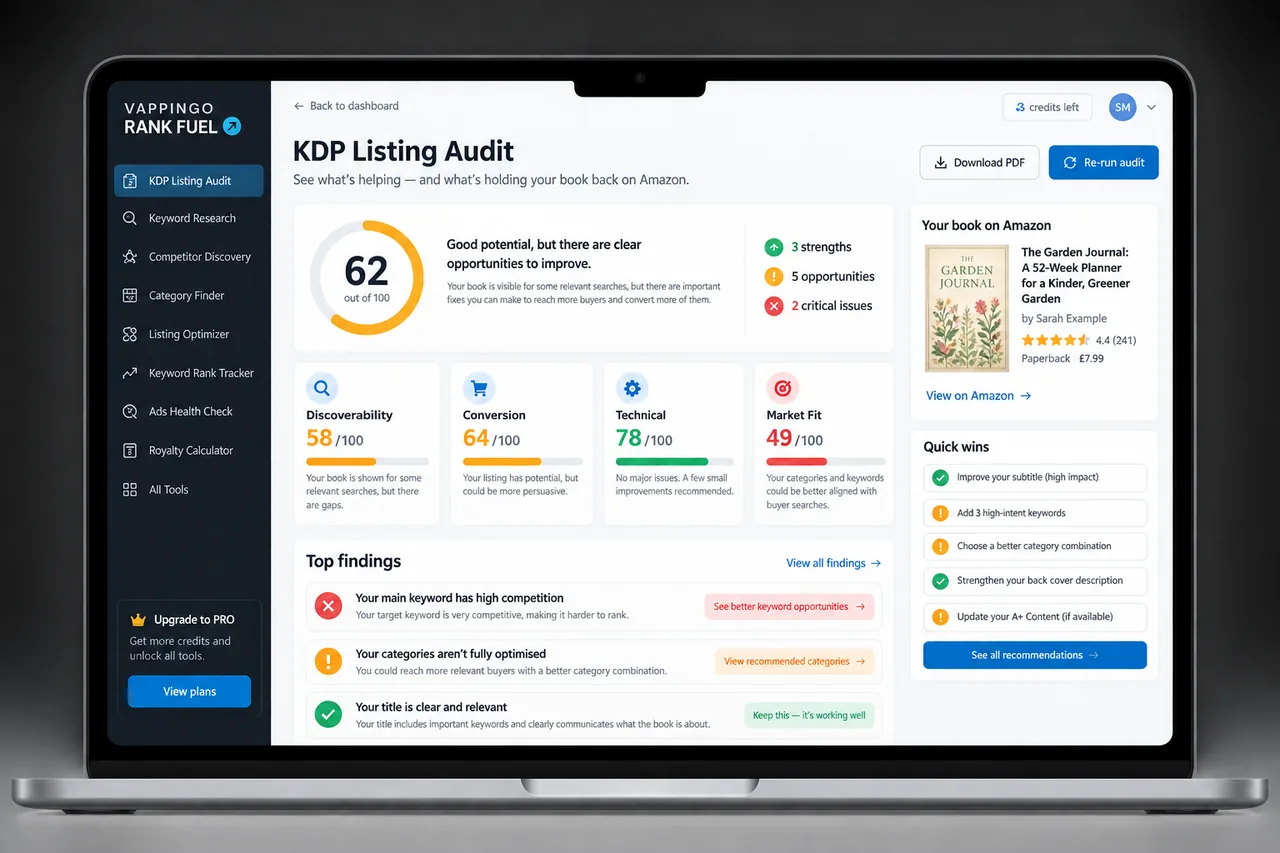
KDP Rank Fuel can support keyword research and listing work from the same book project. Use estimated search evidence to choose metadata, then write the description for the reader who lands on the page.
Separate search research from sales copy
Build two columns when you prepare a listing. In the first, keep the candidate search phrases you may use in KDP keyword metadata. In the second, write the reader-facing ideas the description must communicate: premise, audience, stakes, method, outcome, and genre expectations. A phrase can influence both columns only when it is genuinely natural in the sales copy. This simple separation prevents a common failure mode: a strong description becoming awkward because keyword research was pasted directly into it. It also makes revisions easier. You can change backend search coverage without rewriting persuasive copy, or improve the description without pretending the edit is a keyword experiment.
Frequently Asked Questions
Does Amazon use my book description as a backend keyword field?
KDP does not document the description as an additional backend keyword field. Its current help separates the reader-facing description from the dedicated keyword entries, and its description rules prohibit keyword or book-tag phrase lists.
How long can a KDP book description be?
KDP currently allows up to 4,000 characters, including any HTML tags used for formatting.
Can I use AI to draft my description?
AI can be useful for options and first drafts, but verify every book fact, remove generic or invented claims, and make sure the final copy complies with KDP description rules.
Should I copy the structure of bestselling descriptions?
Study patterns across several close comparables, but do not copy wording. A bestseller has many reasons for selling, so its description is an example to analyze, not proof of a universal formula.
What matters most in a description?
Clarity, reader fit, a compelling premise or promise, accurate expectations, and professional writing. Use search research to understand reader language, then write the copy for humans.
Put the Evidence Into Practice
The strongest publishing workflow is easy to defend later: each metadata choice has a clear reason, each estimate is labeled as an estimate, and each change is recorded so you can learn from the result. That discipline survives platform changes better than any secret-algorithm shortcut.
KDP Rank Fuel connects book-centered keyword, competitor, category, listing, advertising, and performance workflows. Treat search figures and scores as research aids, and verify important decisions against the live Amazon market.
Vappingo provides professional manuscript proofreading by qualified human editors for self-publishing authors.