KDP Keywords for Nonfiction: What Readers Actually Search For
Build nonfiction KDP keywords around reader problems, outcomes, audiences, methods, and situations instead of internal industry language.
Nonfiction keyword research operates on fundamentally different principles from fiction. Nonfiction readers are not searching for an emotional experience , they are searching for a solution to a specific problem. Your keyword strategy must reflect the precise language those readers use when they type their problem into Amazon’s search bar. For the full keyword framework, see our
Amazon changes metadata, taxonomy, and merchandising systems. This article reflects the September 2026 workflow, but the live KDP interface and help pages remain the final authority.
How Nonfiction Readers Search
Nonfiction readers approach Amazon search in one of three ways:
Problem-first
They know what problem they have and are looking for any solution. “How to stop procrastinating,” “why am I always tired,” “how to start investing.” These searches are highly intent-driven , the reader is actively looking for help right now.
Solution-first
They know the type of solution they want and are looking for the best book that delivers it. “CBT workbook for anxiety,” “Atomic Habits style productivity book,” “Stoic philosophy guide.” These readers have done some research and know what approach they want.
Audience-first
They are searching for books targeted at their specific situation. “Books for first-time managers,” “investing guide UK beginners,” “ADHD productivity book.” These readers identify by their audience category first. An effective nonfiction keyword set captures all three search patterns , problem, solution, and audience , across the seven available fields.
The Five Nonfiction Keyword Types
- Problem keywords: The specific problem in reader language. “How to stop procrastinating,” “overcome imposter syndrome,” “fix sleep problems naturally.”
- Outcome keywords: What the reader achieves by reading the book. “Double freelance income,” “write novel in 90 days,” “lose weight without counting calories.”
- Methodology keywords: The approach or system the book teaches. “CBT anxiety workbook,” “Pomodoro productivity system,” “keto diet for beginners.”
- Audience keywords: Who the book is specifically for. “Productivity ADHD adults,” “investing guide UK beginners,” “leadership first-time managers.”
- Subject-specific terminology: The precise vocabulary of your niche. “Stoic philosophy daily practice,” “agile project management,” “macronutrient tracking.”
Business and Career Keywords
Business readers are results-oriented and time-conscious. Keywords that signal specific, measurable outcomes convert better than broad category terms.
High-value patterns
“leadership skills first-time manager,” “negotiation salary raise strategy,” “startup marketing small budget,” “freelance pricing raise rates,” “side hustle passive income beginners,” “public speaking confidence tips,” “remote team management productivity.” Use these as research patterns rather than phrases to copy blindly; the wording should match the book’s actual promise and the language its readers use.
Self-Help and Personal Development
Self-help readers search at the intersection of problem and emotional state. The most effective keywords name both the practical situation and the internal experience.
High-value patterns
“overthinking anxiety spiral stop,” “people pleasing boundaries setting,” “self-sabotage patterns break cycle,” “confidence building introverts,” “morning routine high performers,” “habit building ADHD brain,” “procrastination root causes fix.” The useful pattern is problem plus context or audience, provided every phrase still describes the book accurately.
Health, Fitness, and Nutrition
Health keywords must be specific to the approach and the target audience. Generic health keywords face enormous competition from established publishers.
High-value patterns
“intermittent fasting women over 50,” “anti-inflammatory diet beginners guide,” “strength training women home workout,” “gut health microbiome repair diet,” “yoga beginners flexibility stress,” “running plan beginners 5K training.” Health searches also require particular care with accuracy because a highly specific phrase can attract the wrong reader if the book does not genuinely cover that topic.
Finance and Investing
Finance readers are highly specific about their situation , market (UK vs US), experience level, and investment type all matter and should be reflected in keywords. A phrase that is useful in one country can be misleading in another, especially when tax, pensions, property, or regulation are involved.
High-value patterns
“investing beginners UK stock market,” “index fund passive investing strategy,” “personal finance debt payoff plan,” “first home buying guide UK,” “retirement planning 40s catch up,” “crypto investing risk management beginners.” Build the final set from the market the book actually serves rather than combining incompatible jurisdictions simply to widen coverage.
How-To and Instructional
How-to books are among the most keyword-friendly nonfiction categories because readers search in “how to” format naturally. That makes reader-language research particularly valuable because the search itself often states the task the buyer wants to complete.
High-value patterns
Use the actual “how to” phrasing readers use , “how to write a novel beginners,” “how to start a podcast step by step,” “how to declutter home minimalist,” “how to meditate anxiety beginners,” “how to negotiate salary raise.” Compare autocomplete, comparable books, and your own advertising/search-term evidence before deciding which variants deserve a field.
Building Your Nonfiction Keyword Set
For a nonfiction book, a balanced seven-keyword set:
- 2 problem-based phrases (in reader language)
- 1-2 outcome-based phrases
- 1 methodology phrase (if your approach is searchable)
- 1-2 audience-specific phrases
The most common mistake in nonfiction keyword research is using the author’s vocabulary rather than the reader’s. The reader who searches “stop procrastinating” is not searching “executive function optimization.” Use the words readers use, not the words you use in your book.
‘s produces a complete listing , including keyword recommendations across all five nonfiction keyword types , from a single sentence about your book. It translates your expert knowledge into reader search language automatically. Your keywords will work only if your content delivers what they promise. from Vappingo ensures your nonfiction is error-free and as credible as your keyword strategy suggests.
Build Nonfiction Keywords From the Buying Problem
A nonfiction reader often searches before they know the terminology an expert would use. Build a research sheet with five columns: the problem the reader feels, the outcome they want, the audience identity they use, the method they may know, and the situation that creates urgency. Generate candidate phrases from those columns, then verify them against Amazon search behavior and competing books. The best backend set usually mixes several of these routes rather than repeating the title in slightly different forms.
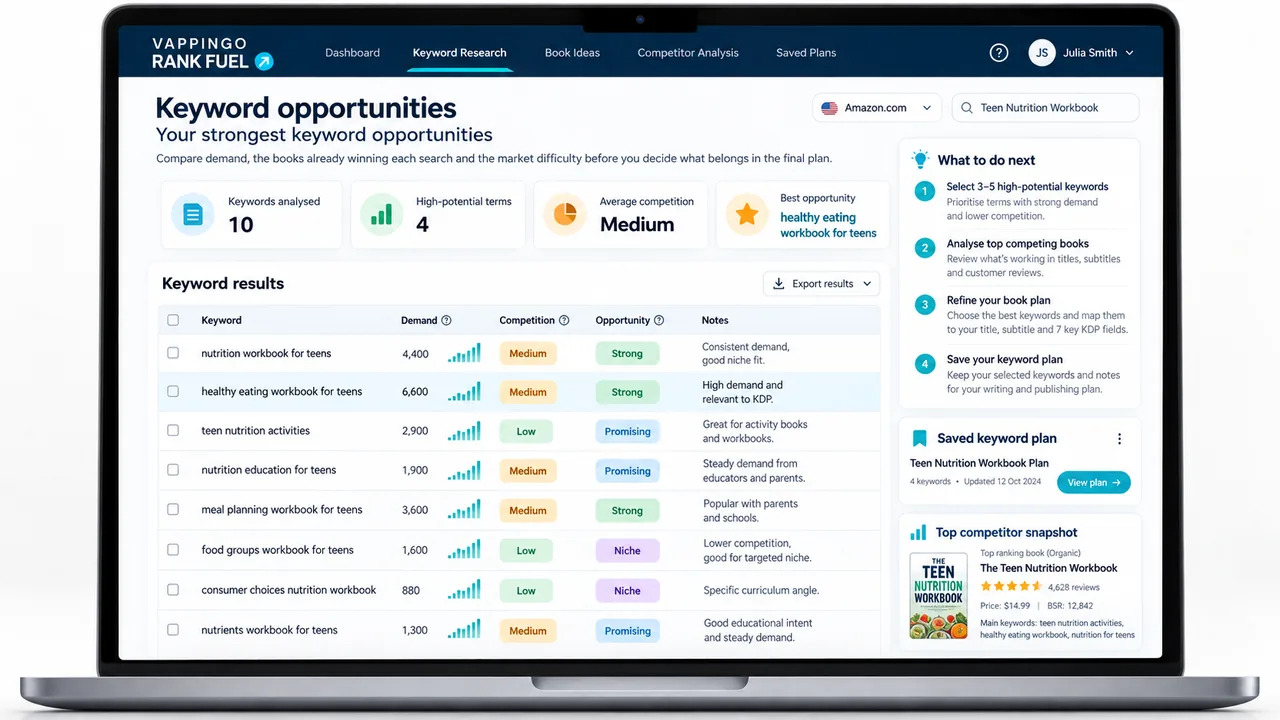
KDP Rank Fuel can support keyword, category, rank, and market research. Its scores and estimates are research aids; Amazon does not publish the proprietary formulas behind search placement or exact sales thresholds.
Metadata can help the right reader find a book, but the listing and manuscript still have to earn trust. Vappingo provides professional manuscript proofreading by qualified human editors.
Frequently Asked Questions
How many KDP keyword fields are there?
KDP currently provides up to seven keyword fields. Use them for relevant keywords or short phrases and avoid padding the set with duplicate or prohibited language just to fill space.
Should I repeat my title or categories in the keyword fields?
Usually no. KDP advises against repeating metadata already covered elsewhere. Use the limited keyword fields to add distinct reader search language.
How often should I change KDP keywords?
There is no required refresh schedule. Change them when research, positioning, marketplace behavior, or post-launch evidence gives you a clear reason, and keep a record of what changed.
Can I use competitor author names or book titles as keywords?
KDP warns against unauthorized references to other authors, books, or trademarked terms. Use compliant reader language and verify the current metadata rules before publishing.
Do KDP keywords guarantee a search ranking?
No. Keywords are metadata inputs, not guaranteed positions. Search visibility also depends on relevance, shopper behavior, competition, listing quality, and Amazon-controlled systems.
Make the Metadata Easier to Defend
The strongest KDP metadata strategy is easy to explain: every category accurately describes the book, every keyword represents a plausible reader search, every change has a reason, and no part of the plan depends on a retired support workflow or an undocumented ranking formula. That standard makes the listing safer, clearer, and easier to improve as Amazon changes.