How to Write an Essay Introduction: The Definitive Guide

Today we’re going to show you how to write an essay introduction that: Makes your teacher/professor want to read the rest of the essay. Introduces the topic in a clear and effective way. Avoids the common traps many students fall into. Gets your essay off to the perfect start. Contents: Writing an Essay Introduction Things … Read more

164 Phrases and words You Should Never Use in an Essay—and the Powerful Alternatives you Should

This list of words you should never use in an essay will help you write compelling, succinct, and effective essays that impress your professor. Writing an essay can be a time-consuming and laborious process that seems to take forever. But how often do you put your all into your paper only to achieve a lame … Read more

How to Write a Killer Statement of Purpose: The Ultimate Guide (With FREE PDF Checklist)

We’ve reviewed thousands of statements of purpose and know exactly what makes the best stand out. If you want to know how to write a statement of purpose that gets you noticed—and gets you admitted—you’re in the right place. In this guide, we’ll walk you through the same checklist our professional editors use to help … Read more

How to Write a Thesis Statement That Your Professor Will Love

If you’re wondering how to write a thesis statement without getting into a complete muddle, check out our incredibly simple thesis statement template to craft an amazing thesis statement. Simply fill in the blanks, and you’re done. When it comes to perfecting the dark art of thesis statements, there’s good news and bad news: The … Read more

A Quick and Easy Guide to the MLA Works Cited Page in Academic Documents

Today we’re taking a look at the MLA works cited page and reviewing the style guidelines for formatting references in the bibliography. First off, here’s a general overview of some of the information that should be contained within your works cited page when editing academic documents and how the references should be formatted. References should appear … Read more

What Not to Write on a Resume: 8 Statements You Should Avoid

What not to write on a resumeUnderstanding what not to write on a resume requires analyzing if what you are saying actually makes sense. The majority of people write resumes that are full of stock phrases and high-level claims that mean absolutely nothing to the average recruiter. If you want your resume to be read and, more importantly, you’re looking for an interview, you need to make sure that it stands out from the rest and steers clearly away from empty clichés and meaningless jargon. It does happen: take a look at these funny cover letters.

Here’s my take on what not to write on a resume:

Read more

[Infographic] Help For Writer’s Block: 7 Tips to Boost Your Creativity

Student suffering from writers blockDo you need help for Writer’s Block?

Writer’s block is inevitable; it can happen at any point and, when it does, it’s a pretty serious problem.

There comes a time in every writer’s life when the creativity, desire, and motivation to produce an amazing piece of literature just stops dead. You know you need to keep on writing: you have a deadline to meet, your readers are waiting to read your next installment or you know Google will be shortly de-ranking your site for infrequent content. But sitting there at your desk surrounded by empty coffee cups, a few scribbled notes and a snoring dog (that may just be me), you feel about as inspired as a soggy dishrag—and potentially just as worn out and smelly.

Read more

When to Use a Semi-Colon

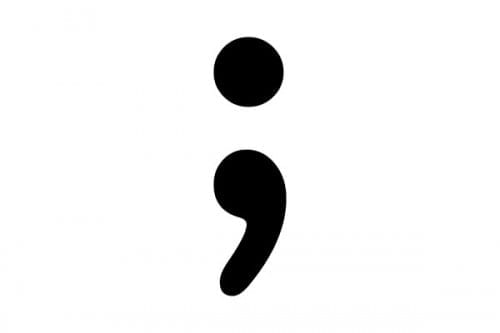
Punctuation marks semi colonKnowing when to use a semi-colon is something that does not come easily to many writers, and many people are confused as to when a comma or colon should be used in favor of a semi-colon, and vice versa. However, it really is worth taking the time to learn about this punctuation mark and when it should be used, as the correct use of it in your writing can really make a difference to the power of your communication. There are basically three situations in which you should use a semi-colon:

Read more

Em Dash vs. En Dash: A Quick and Simple Guide

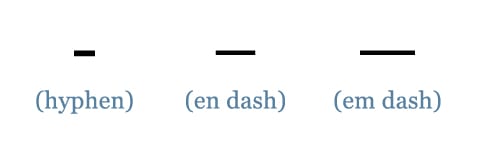
Picture of the en dash and the em dash

In the battle of the em dash vs. the en dash it is critical that writers are aware of the major differences between the two punctuation marks and that they ensure they use them correctly and in the appropriate format in their written documents. Otherwise, you may find yourself guilty of making funny punctuation mistakes.

Read more

When to Use Exclamation Marks

When to use Exclamation MarksIt isn’t easy to grasp the concept of when to use exclamation marks, especially in today’s world where they seem to be more common than Charlie Sheen’s trips to his local liquor store.

Some people think that they add flare and expression to writing, while others detest them, claiming that exclamation marks serve no real purpose and should be eradicated from English punctuation for good.

Here’s our view on the exclamation mark and when it should, and should not, be used.

Read more

How to Write Theses Statements That Grab Your Readers by The Balls

how to write interesting thesis statementsIt’s easy to write great papers about some topics, such as your love of rally car driving, how you pulled the girl of your dreams, or why Britney Spears is not in the running for Mother of The Year. If something interests you or fuels passion within, then putting pen to paper (or tapping those keys) is easier than seducing Tiger Woods.

But what if the subject is mundane, such as a commentary on the internal hierarchy of political organizations, an analysis of asphalt and assorted other road surface materials or a discussion on how CAM and C4 photosynthesis differ?

How do you get an essay noticed when the subject is so darn boring?

Read more

8 Quick Tips for Writing an Academic Proposal

Picture of someone writing an academic proposalAn academic proposal constitutes your first step towards producing your thesis or dissertation. It’s a very important document because it is intended to persuade your supervisor that the research you are considering will be useful and worthwhile; if they are not convinced by your proposal then you will not be permitted to progress to even writing your thesis statement. Here are some top tips on writing an academic proposal that gets results.

Read more

Choosing a Persuasive Essay Topic: Dos and Don’ts

Picture of a frustrated guy, finding it difficult to choose a persuasive essay topic.Choosing the right persuasive essay topic one is the first step towards getting the grade that you want. It’s impossible to emphasize how important the right topic is in writing a persuasive essay. According to our essay editors, it’s often the difference between an average paper that is nevertheless difficult to write, and an outstanding paper that gives you no real trouble. A persuasive essay — which should not be mistaken for an argumentative essay — should be passionate and convincing. Therefore, it’s vital to choose an essay topic that you can be passionate and convincing about. Writing about something that doesn’t engage you is unlikely to result in a paper that will engage and interest your audience. Take a look at our argumentative essay outline and persuasive essay outline for more insights.

If you have been asked to write an expository essay, take a look at our guide to expository essays.

Professors grade a lot of papers. They are not only looking for essays that fulfill the terms of the assignment — they’re looking for work that exceeds those expectations and stands out from the rest. A great way to distinguish your persuasive essay from the very first sentence is to

Read more

14 Punctuation Marks Everyone Needs to Master

There are 14 punctuation marks in English grammar. Master them all and… well, you’ve mastered punctuation!

In this guide to punctuation, we take a look at common punctuation marks and how they are used. We also provide some great examples of how you can use punctuation marks in your writing and when proofreading and editing your work. We’re also offering a free punctuation poster to boot!

1. The Semi-Colon

Punctuation marks semi colon

The semi-colon is an immensely useful punctuation mark for those who are looking to slam two slightly related clauses together into a single triumphant sentence.

Semi-colons are most commonly used to merge two independent clauses. For example:

Read more

The Secrets to Writing Amazing Argumentative Essays

Argumentative essays often strike fear deep into the heart of even the most dedicated students; there really is no need. Let’s face it, we all like a good argument every now and again! Everyone’s at it: politicians, news broadcasters, lawyers, and solicitors… even that noisy couple next door who can’t seem to agree on whose turn it is to take the garbage out! But topping the list of supporters of the argumentative form simply has to be teachers and professors. It doesn’t matter what the subject is, the chances are that, at some point during the school year, you will be asked to write an argumentative essay.

Well, fear not, our essay editors have put together just the guide for you, and in a few minutes time, you will have the confidence and knowledge to go forth and argue!

Read more