[Infographic] Converting a Singular Noun to a Plural Noun

A plural noun is more than one person, place or thing. The majority of nouns in written English are transformed into their plural noun form through the addition of the letter “s” at the end of the word. However, this is not always the case and there are a number of rules that you should be aware of. Our free infographic provides a handy decision tree that you can use to decide how to change the singular form of a noun into the plural form. Simply start at the beginning and answer each question in turn in order to find out what the plural noun form of your word should look like.

Bear in mind, in some cases, words can be both singular and plural. You can read more in our guide to words that are both singular and plural.

If you’re looking for more practice advice on using nouns, check out our guides to concrete nouns and abstract nouns.

Read more

What Punctuation Mark Should I Use? A Free Printable Punctuation Cheat Sheet

People who do not use punctuation deserve a long sentenceThere may be many occasions when you are composing a written document that you have to stop and ask yourself: “what punctuation mark should I use?

Punctuation marks can be very confusing, and there are endless lists and rules out there that dictate when you should, and should not, use them. If you are not fully confident with the rules that govern the use of punctuation marks, then our free printable punctuation cheat sheet may be just what you’re looking for. We have simplified the rules as much as possible and condensed them into a two-page cheat sheet that you can print out and refer to on a regular basis.

Read more

A List of Common Prepositions

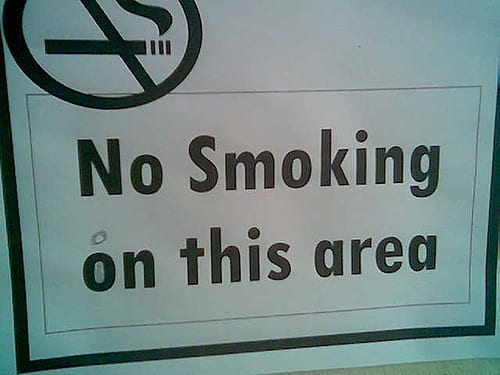
Sign reads: "no smoking on this area"In this article, we take a look at prepositions and provide a list of some of the more common prepositions in use in the English language.

A preposition is a relationship or directional word that is used to link nouns, pronouns, verbs and phrases to one another within a written sentence. Prepositions are critical to the meaning of a sentence and changing a preposition can significantly change the meaning of the sentence.

If you want to learn more, take a look at our guide to identifying prepositions and prepositional phrases.

Read more

Using English Syntax to Enhance Your Writing

There was nothing passive about her aggressionThe effective use of English syntax in your writing can change everything. Using syntax well is not just about how you write and punctuate a sentence, it is about how the sentence is put together and constructed. Yes, a grammatically correct sentence is great, but it is the well-crafted sentence that makes a massive difference to the reader.

Confused? Let’s start by taking a look at the difference between syntax and grammar.

Read more

When to Use Dot Dot Dot (The Ellipsis)

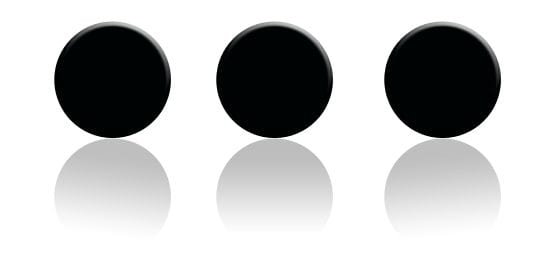
picture of an ellipsis: three evenly spaced dotsKnowing when to use dot, dot, dot, or the ellipsis as it is formally named, is something that does not come naturally to many writers, and it is one of the most commonly misused punctuation marks in existence.

One of the main causes for this confusion concerns the fact that the dot, dot, dot has evolved into a punctuation mark that is frequently used in informal communications, often to denote a pause or that some information is missing. While this is perfectly acceptable, the ellipsis has been increasingly overused to the point that many people litter their writing with multiple period marks to the extent that it often loses all meaning. In this article we take a look at the ellipsis, what it looks like and, most importantly of all, when it should and should not, be used.

If the elipsis is not the only punctuation mark you struggle with, you may also appreciate our guide to the the punctuation marks everyone should master.

Read more

What is Grammar and Why is It Important?

Grammar talksHave you ever actually stopped to consider the question, “What is grammar?”

If you take the time to think carefully about it, you may actually experience problems pinning down an interpretation of this complex linguistic field. That is exactly why it causes so many people so much confusion and results in grammatical mistakes.

In addressing the question of “what is grammar,” the Oxford Dictionary defines grammar as:

Read more

101 Examples of Onomatopoeia in Sentences

Onomatopoeia is a word or group of words that, when spoken aloud, imitates the sound it produces. Onomatopoeia is extremely useful in written English because it helps authors to describe sounds accurately and makes writing much more lively and interesting. Here is a comprehensive list of 101 examples of onomatopoeia in sentences. In each example, the onomatopoeias are underlined.

Examples of Onomatopoeia in Sentences

1)    On my first morning on the farm, I was awoken suddenly by the cock-a-doodle-do of the resident rooster.

Read more

12 Capitalization Rules Most People Don’t Know

Capitalization rules can be extremely difficult to master, and there are a number of common capitalization errors that our proofreaders and editors come across time and time again.

In this article, we take a look at some of the capitalizations rules that are regularly flouted and explain the do’s & don’ts of using capital letters in your writing.

Picture of the number oneDo capitalize official job titles or role names but only if they come before the name and are attached to the name. Do not capitalize the title if it comes after the name.


  • President Barack Obama

or

  • Barack Obama, president


  • Llama Farming President Donkey Jones

or

  • Donkey Jones, llama farming president

Read more

Idioms in Music: Lady Gaga Lyrics Explained

Picture of Lady Gaga wearing meatIf you’re teaching or learning English, one way to keep things interesting is to look at the use of idioms in music.  One musician who certainly knows how to rock idioms is Lady Gaga.
Lady Gaga shocked the world in 2011 when she appeared at the MTV Video Music Awards wearing a dress made of meat… yuk!  Love her or loathe her, her songs can be actually very useful if you are learning English as a second language. In this article, we take a look at the idioms contained within some of Lady Gaga’s most popular songs and tell you exactly what they mean.

Read more

Introductory Phrases. What Are They and Why Should You Care?

Image of introductory phrasesLast week we promised to share some of our proofreader’s tricks of the trade and because we’re great at keeping promises, here they are. Again we’re looking at the common English errors that proofreaders will look for when they are studying a document. This week we’re going to stick with the comma theme and explore another one of the errors that seem to appear regularly: failing to use a comma after introductory phrases or words.

Read more