Amazon Browse Nodes and KDP Categories: What Authors Need to Know
Learn what Amazon browse nodes are, how they relate to KDP categories, why node IDs can help with research, and what authors should not infer about rankings or recommendations.
A browse node is Amazon’s technical identifier for a position in its product taxonomy. For books, those positions underpin the category paths shoppers use to browse the Kindle Store and Books department.
KDP authors do not normally need to type node IDs into the publishing dashboard. You select category names and paths. Node knowledge becomes useful when you are researching the store, comparing closely named categories, or documenting exactly which shelf changed.
What a Browse Node Is
Amazon organizes products into a hierarchy of departments, categories, and subcategories. A browse node is an identifier associated with one of those points in the hierarchy. A specific node can sit beneath broader parent nodes, which is why a category path can look like a chain from Books to genre to subgenre.
For an author, the plain-language path matters more than memorizing the number. The node ID is useful when two categories have similar names or when you need to return to the exact same browse page during a later audit.
How Browse Nodes Relate to KDP Categories
KDP presents authors with category choices rather than a raw node-ID field. Amazon says the available categories depend on marketplace, format, and audience. Those categories correspond to the store’s current taxonomy, which can change over time.
That means an old node ID copied from a spreadsheet may stop being useful even if the book’s subject has not changed. Always verify the current path in KDP and on the relevant Amazon store before treating an old node as active.
Parent and Child Nodes
A parent node is broader; a child node is more specific. The hierarchy helps shoppers narrow a broad interest into a closer match. For authors, specificity is useful when it accurately describes the book because the readers reaching the narrower path are more likely to have the right intent.
Do not assume that selecting the deepest possible path automatically creates free ranking positions in every parent or that every parent rank will display. Amazon separately controls which category ranks appear on the detail page, and it says a book can display up to three Best Seller Category ranks.
Browse Nodes Are Not a Recommendation Graph
The old version of this article treated shared nodes as if they directly caused “also bought,” recommendation, and AI-shopping relationships. Amazon does not publish that rule. Recommendations can use many types of customer and product information, and a shared category does not prove why two books are recommended together.
Do Browse Nodes Matter to Alexa for Shopping?
Amazon renamed Rufus to Alexa for Shopping in May 2026. The assistant can use Amazon’s catalog and shopping information to answer questions and help customers discover products, but Amazon has not published a rule saying a particular book browse node directly changes the assistant’s recommendations.
The practical response is the same as for search: maintain accurate category, keyword, title, description, and audience metadata so Amazon has a coherent product record. Avoid claims that a node ID is an “AI signal” with a known weight.
How to Use Node IDs in Research
- Save the exact category path and node URL when you audit a book.
- Distinguish two similarly named categories in different parts of the store.
- Check whether an old category path still resolves after Amazon changes its taxonomy.
- Compare the correct Kindle Store or Books category rather than mixing formats.
- Document a category change precisely for a co-author or publishing team.
Browse Nodes vs Search Keywords
Browse nodes describe taxonomy; keywords describe search and subject language. KDP says categories and keywords both help with discoverability, but they are different inputs. A reader can discover a book by browsing a category, searching a phrase, clicking an ad, following a recommendation, or arriving from outside Amazon.
Keep the systems separate in your analysis. If a book gains search visibility after a keyword edit, do not attribute that change to its browse node without evidence.
How to Inspect a Browse Node in Practice
When you open an Amazon category page, save both the readable breadcrumb and the URL. The breadcrumb tells you how shoppers understand the shelf; the URL or node identifier helps you return to the same technical location later. Record the marketplace and format as well, because a similar-looking path in another store may represent a different node or competitive set.
Next, inspect the first page of books rather than the node number alone. Are the leading titles genuinely comparable to yours? Do they share the same audience, format, and subject? If the answer is no, a technically precise node may still be the wrong strategic shelf. Browse-node research is most useful when it helps you verify category identity and comparables, not when the ID itself is treated as an Amazon ranking signal.
Frequently Asked Questions
How many KDP categories can I choose?
KDP currently allows up to three categories during title setup or editing. The available choices depend on the book’s primary audience, primary marketplace, and format.
Do I need a browse node ID to publish on KDP?
Normally no. KDP lets you select categories by path in the publishing interface.
Can I use a node ID to force a category placement?
KDP does not provide authors with a general node-ID field for forcing placements. Use the current category selector.
Do shared browse nodes prove two books are direct competitors?
No. They show taxonomy overlap. Recommendation and search systems use additional information that Amazon does not fully disclose.
Is Rufus still the current name?
Amazon renamed Rufus to Alexa for Shopping in May 2026.
Use Browse Nodes for Precision, Not Mythology
Browse-node knowledge is valuable when it makes your category research more exact. Save paths, verify IDs, and use them to understand Amazon’s taxonomy. Stop there unless Amazon or your own evidence supports a broader conclusion.
Research the shelf without handling node IDs manually
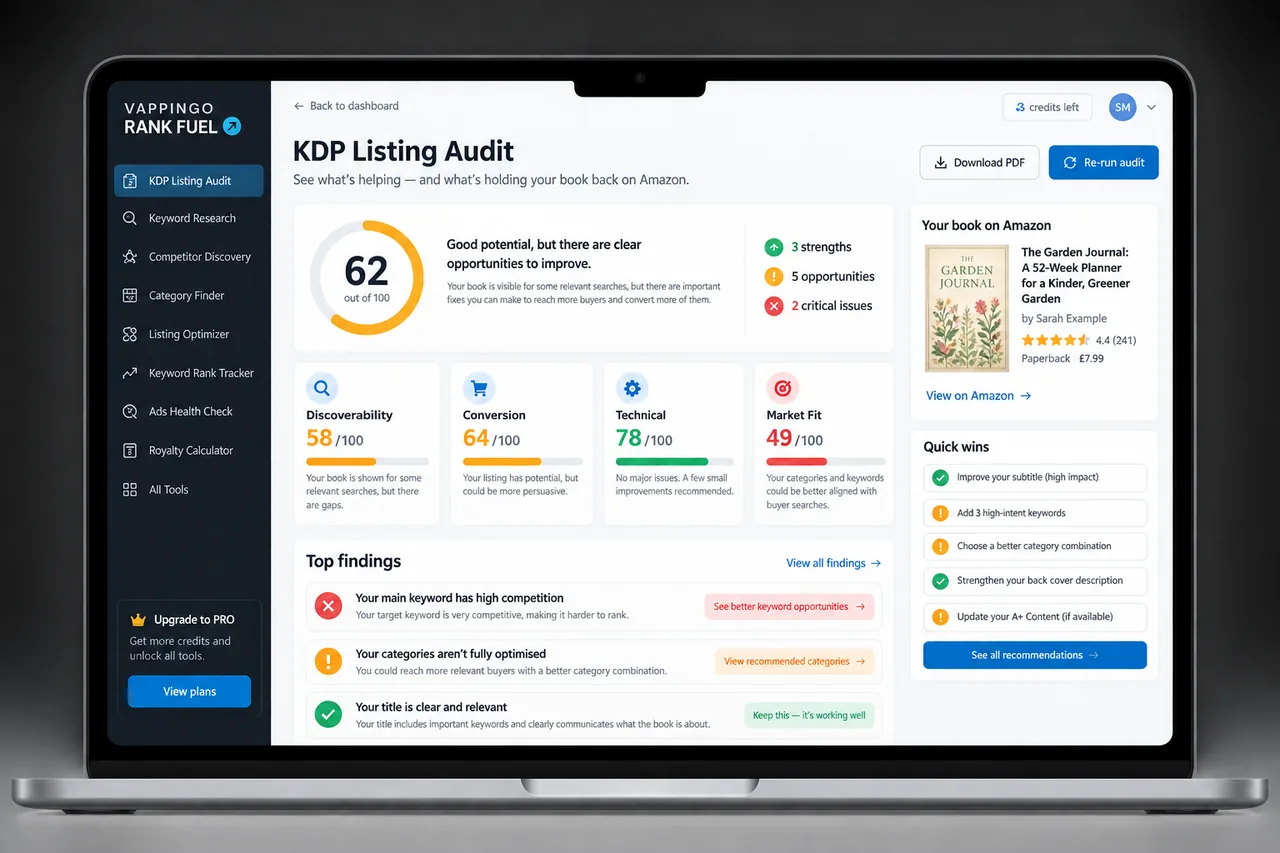
Category Finder and Category Research present category paths and comparative evidence in a reader-friendly workflow.