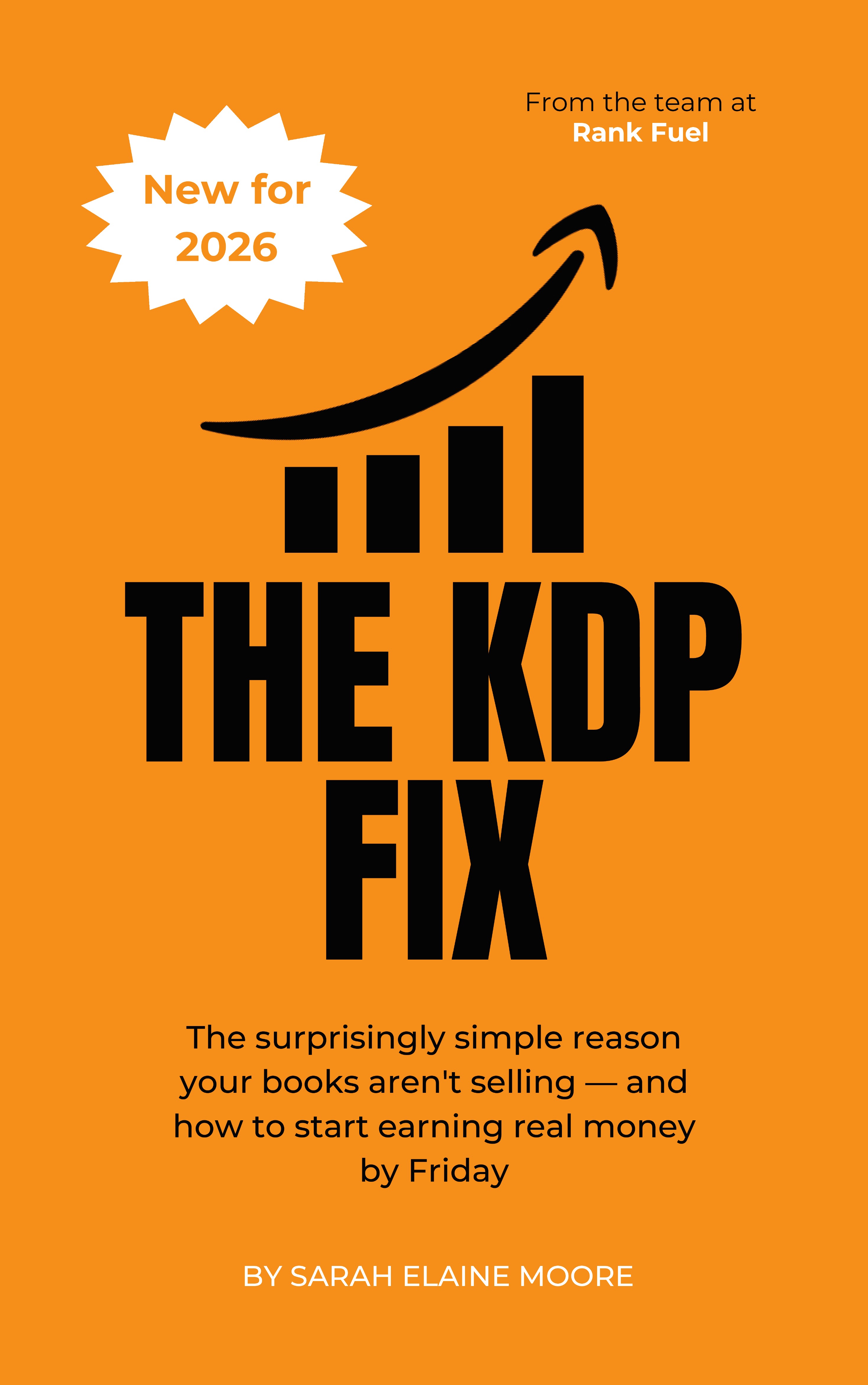
Can You Make Money on KDP? The Honest 2026 Answer
KDP can produce anything from little income to a full-time business. The honest answer depends on demand, quality, visibility, conversion, catalog economics, and cost control.
Yes, you can make money on KDP. The evidence also says that many self-published authors earn very little, while a smaller group build meaningful side income or full-time businesses. Both statements are true, and any honest answer has to keep them together.
KDP itself is a distribution and production platform, not an income plan. Your result depends on demand, product quality, catalog structure, price and royalty economics, discoverability, conversion, reader retention, marketing, and the costs required to produce and sell the books.
What Current Indie-Author Surveys Show
Written Word Media’s 2025 survey received 1,346 responses from authors worldwide and explicitly warns that its audience skews toward serious, prolific indie authors. In that sample, 44% reported earning $100 or less per month, 13% reported more than $5,000 per month, and 8% reported more than $10,000 per month.
Those numbers show a wide distribution, not your probability of success. The survey is self-reported and is not a random sample of KDP accounts. It is useful for understanding that both low and high earnings exist inside indie publishing.
The Five Variables That Do Most of the Work
First is market demand: people have to want a product like the one you made. Second is the book itself: the interior has to deliver the promise. Third is discoverability: relevant shoppers must be able to find it. Fourth is conversion: cover, positioning, price, description, proof, and sample have to make the book easy enough to choose.
Fifth is the economic model. A book that creates revenue but requires more in ads and production costs than it contributes is not a profitable business. Series read-through, KU, direct reader channels, and a larger catalog can change the economics, but none of them rescues weak demand.
How KDP Royalties Actually Work
eBooks currently use 35% or eligible 70% royalty options. The 70% option has price, territory, and other eligibility rules, and delivery cost is deducted. Print books use 50% or 60% standard Amazon royalty rates based on list price and marketplace, then printing cost is subtracted.
Kindle Unlimited is different again. KDP Select eBooks earn from normalized pages read and the monthly Select fund rather than from a fixed permanent per-page rate.
Why Catalog and Series Can Change the Outcome
More viable books create more products that can be discovered and more chances for a satisfied reader to continue into the catalog. Written Word Media’s survey data repeatedly shows strong correlations between catalog size and higher income, although the survey does not prove that adding books causes the income increase.
The quality of the connection matters. Ten unrelated books in ten weak markets can be less valuable than a smaller catalog serving one clear audience with follow-on demand.
There Is No Honest ‘Realistic KDP Timeline’
The first sale can happen quickly or never. Break-even depends on production and marketing costs. Side income can arrive before a full catalog exists or remain elusive after many books. Full-time income depends on the amount the business needs to contribute and how stable that contribution is.
Judge the business by evidence gates instead: prove demand, prove the product can be found, prove it can convert relevant traffic, prove the unit economics, then decide whether the model deserves more books or more marketing.
What KDP Income Is Not
It is not guaranteed passive income. It is not a fixed royalty percentage multiplied by a search-volume estimate. It is not a business where uploading more files automatically improves the result.
KDP can create leverage because a finished book can continue earning after the production work is complete. The more passive the income becomes, the more likely it is that strong earlier work, a viable backlist, and a functioning reader-acquisition system are sitting underneath it.
Which Rank Fuel Tools Fit This Problem?
Use the tool that answers the next decision rather than opening everything at once. Rank Fuel works best when research, listing changes, advertising, and performance evidence stay attached to the same book.
| Tool | Use it when… |
|---|---|
| Rank Fuel Radar | Test an idea before spending weeks producing it. |
| Keyword Research | Find relevant buyer-search demand. |
| Listing Audit | Diagnose live books that are not converting. |
| Review Intelligence | Use reader feedback to improve the product. |
| Royalty Calculator | Keep revenue and unit economics separate. |
Frequently Asked Questions
Can you really make money on KDP?
Yes. Public indie-author surveys include both modest and high earners, but the result is highly variable and not guaranteed.
What percentage of KDP authors make a living?
There is no reliable KDP-wide percentage. Surveys of indie authors have sampling bias and should not be turned into platform-wide probabilities.
What makes the biggest difference?
Demand, product quality, discoverability, conversion, catalog/reader economics, and cost control.
How long does it take?
There is no universal timeline. First sale, break-even, side income, and full-time income are separate milestones.
Is Kindle Unlimited better than direct sales?
They are different models. KU can be powerful for some genres and catalogs; direct sales can improve customer ownership and margin but requires traffic and operations.
Should I quit if the first book does not sell?
Not automatically. Diagnose whether the problem is the market, visibility, click-through, conversion, or product before deciding whether to improve, reposition, or move on.
KDP Can Work. The Business Still Has to Earn the Result.
A platform with millions of shoppers creates opportunity, not certainty. Build books around real demand, make the buying path work, and scale only what the evidence says deserves more time and money.