Amazon Ads for Book Series: Measure the Click and the Read-Through
Series ads can acquire a reader whose value extends beyond book one. Learn how to separate Amazon's attributed metrics from your own read-through and lifetime-value evidence.
Advertising a book series is different from advertising a standalone because the value of a newly acquired reader can extend beyond the first sale. That does not mean you should ignore the economics of book one or assume every reader will finish the series.
A better series strategy measures two layers at once: what the campaign directly reports and what the wider catalog earns from readers who continue. Keep those layers separate so lifetime value improves your decisions without becoming an excuse for unprofitable advertising.
Why Book One Is Often the Main Acquisition Target
Book one is usually the cleanest entry point because the reader can start without context and later progress naturally through the catalog. Amazon Ads itself highlights series promotion as a use case, and an Amazon Ads author case study describes a publisher treating first-book advertising as the cost of acquiring a series reader.
That is a case study, not a universal rule. A later book may deserve direct advertising around a launch, a special theme, or existing reader demand. The strategic question is which title gives the right shopper the lowest-friction route into the series.
Start With the Metrics Amazon Actually Reports
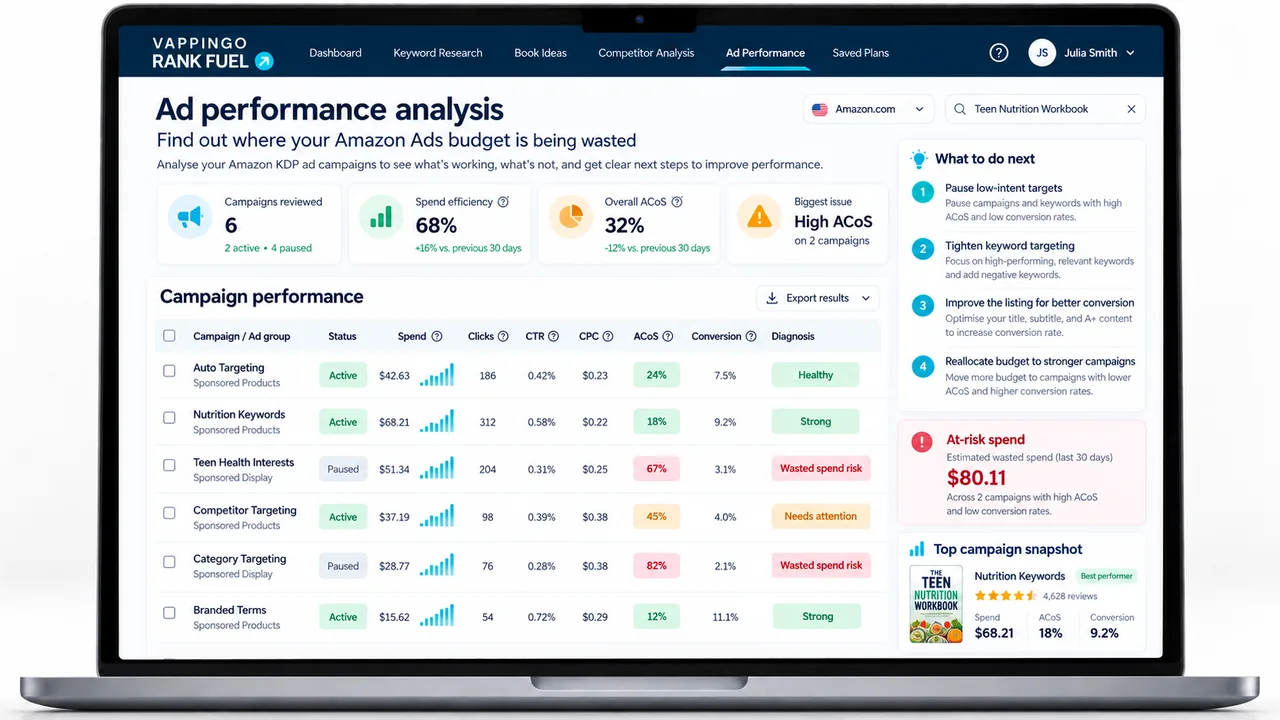
Sponsored Products are cost-per-click ads. Track impressions, clicks, spend, attributed orders or sales, targets, and search terms inside the advertising console. ACoS tells you ad spend as a percentage of attributed sales; ROAS expresses attributed sales relative to ad spend.
Those metrics describe the advertising attribution window, not the entire reader lifetime. They cannot automatically tell you whether someone later bought books two through six organically or read them through Kindle Unlimited.
Measure Read-Through Separately
Track how readers move from one book to the next using your own sales and KENP patterns. A simple starting measure compares book-two activity with book-one activity over a period that gives the later book enough time to be reached. For KU, translate page reads cautiously because readers can stop partway through a book.
Do not borrow a genre benchmark and plug it into a profit calculation as fact. Use observed data from your series and update the estimate as the catalog matures.
Estimate Reader Value Conservatively
Begin with the contribution from the advertised sale, then add expected downstream contribution based on observed continuation. If book two is reached by half of book-one readers, its full royalty should not be counted for every acquired reader. Weight each later book by the probability of reaching it.
Keep the estimate conservative because ad attribution, organic discovery, discounting, KU, refunds, and readers entering the series elsewhere can blur the path. Lifetime value is a planning model, not an Amazon-reported metric.
Structure Campaigns by Purpose
Separate discovery from proven targeting. Automatic or broad campaigns can reveal relevant search terms and product targets; tighter phrase, exact, or product-target campaigns can isolate the terms you already understand. Negative targeting can reduce spend on clearly irrelevant traffic.
Do not create so many campaigns that the data becomes too thin to interpret. The best structure is the one you can review consistently and connect to a decision about bids, budgets, targets, or the product page.
Sponsored Brands Can Showcase More of the Catalog
Authors with three or more eligible titles under the same pen name can currently use Sponsored Brands, subject to Amazon’s eligibility rules. These ads can showcase multiple books or use video, which can make them useful when the series itself is part of the reader proposition.
Sponsored Brands are not a substitute for a strong entry product. If the shopper does not understand where to begin or the covers do not read as one series, showing more books simply exposes the confusion faster.
Know Whether the Problem Is the Ad or the Book
If a target gets impressions but few clicks, relevance, cover, title, or competitive positioning may be weak. If it gets relevant clicks but few attributed sales, inspect the product page, price, reviews, sample, and promise before increasing bids.
If book one sells but downstream continuation is weak, the advertising may be doing its job. The product or series experience may be the broken gate. Advertising harder at that point can acquire more readers who leave at the same place.
Review the Series at Two Cadences
Review campaign data regularly enough to control spend and identify waste. Review series economics less frequently, because read-through and downstream behavior need enough time to emerge. Mixing the two cadences encourages overreaction.
When you make a major listing, price, or cover change, record the date. Otherwise, a later improvement in sales can be wrongly attributed to an ad adjustment that happened at the same time.
Where Rank Fuel Fits
Use the tool that answers the next decision rather than opening everything at once. Keep the evidence attached to the same book so research, listing work, ranking changes, and advertising decisions build on one another.
| Tool | Use it when… |
|---|---|
| Amazon Ads Generator | Build structured campaigns around the book and its saved research. |
| Amazon Ads Weekly Coach | Turn current campaign reports into controlled weekly actions. |
| Keyword Rank Tracker | Watch whether paid and listing changes coincide with organic visibility movement. |
How Series Ads Change Around a New Release
When a new volume launches, you may have two audiences: readers who need to discover book one and existing series readers who are waiting for the new book. Those audiences should not automatically receive the same ad strategy. Acquisition campaigns should lead cold shoppers into the series; launch activity can focus more directly on the latest release and the author brand.
Record which campaigns are acquisition and which are launch support. Otherwise a strong release week can make first-book advertising look more efficient than it really was because the whole catalog is moving at once.
Set Budgets From Economics, Not From a Desired Bestseller Rank
A daily budget is not a growth target. It is the maximum amount you are willing to expose to the current campaign logic before more evidence arrives. Increase it when targets are producing value you understand, not because the campaign spent its budget.
For a series, the acceptable acquisition cost can be higher than the royalty on book one when downstream value is real. Keep the calculation conservative and revisit it when read-through, price, KU behavior, or the number of live books changes.
Ask the same questions each time
- Which search terms or product targets are producing relevant clicks?
- Which targets are spending repeatedly without attributed sales?
- Is book one converting well enough to justify more traffic?
- Has read-through changed enough to alter reader value?
- Did any cover, price, listing, or promotion change distort the comparison?
- What single campaign action deserves priority this week?
Frequently Asked Questions
Should I only advertise book one?
Book one is often the logical entry point, but launches and specific reader demand can justify advertising later books too.
What is read-through?
The proportion of readers who continue from one book to the next. Use your own observed series data rather than a universal benchmark.
Can Amazon Ads show total series lifetime value?
No. Campaign reports show attributed ad outcomes; downstream organic purchases and KU reading need separate catalog analysis.
Are Sponsored Brands available to authors?
Yes, for eligible authors with at least three eligible titles under the same pen name claimed in Author Central.
Should I increase bids when book one has poor ACoS?
Not automatically. First determine whether the issue is targeting, click-through, product-page conversion, or downstream series value.
Does Kindle Unlimited change the calculation?
Yes. KU can create downstream reading value, but KENP is variable and should be modeled separately from direct purchase royalties.
Acquire Readers, Then Earn the Read-Through
The ad can introduce book one. The series has to create the value after the click. Keep advertising metrics honest and let actual continuation determine how much more a reader is worth.