How to Rewrite a Failing Book Description Without Guessing
A weak description is only one possible conversion problem. Diagnose visibility, clicks, and product-page evidence first, then rewrite the part of the listing that is actually failing.
A weak book description is one possible reason a book is not converting. It is not automatically the reason. KDP does not give every author a native organic product-page view count, so you cannot reliably diagnose description performance by dividing KDP page views by units ordered.
The safer process is to separate visibility, click, and conversion evidence. If the book is rarely appearing for relevant searches, a description rewrite is unlikely to solve the first problem. If relevant ad clicks reach the page and fail to produce enough sales, the product page becomes a much stronger place to investigate.
Step 1: Diagnose the Broken Gate
Start with discoverability. Can the book be found for the searches and categories that should matter? If ranking is weak, investigate relevance, competition, metadata, and demand before assuming the description is the bottleneck.
Then look at paid traffic where available. Amazon Ads gives you clicks and attributed sales, which creates better conversion evidence than KDP Reports alone. A book receiving relevant clicks with weak attributed sales deserves a product-page review that includes cover, title, price, reviews, sample, format, and description together.
Step 2: Make the Opening Earn the Next Sentence
KDP’s current description guidance emphasizes a compelling first sentence and simple, scannable language. The opening should make the reader understand the core promise quickly: the problem solved, the emotional hook, the stakes, the transformation, or the distinctive premise.
Avoid starting with publishing history, background the reader does not need yet, or generic claims such as ‘This groundbreaking book will change your life.’ Give the shopper a reason to care before asking them to process context.
Step 3: For Fiction, Sell the Reading Experience
A fiction description should establish character, desire, conflict, stakes, tone, and the kind of emotional experience the genre promises. It does not need to summarize the whole plot. Too much chronology can make a description feel like a synopsis written for an editor rather than an invitation written for a reader.
Use specificity carefully. A concrete conflict is more persuasive than vague danger, but revealing every twist removes discovery. The strongest description leaves the reader with a question the book is designed to answer.
Step 4: For Nonfiction, Make the Outcome and Reader Obvious
Nonfiction descriptions work best when the intended reader can immediately recognize the problem and understand what the book will help them do, understand, avoid, or decide. Features such as checklists, frameworks, examples, and case studies matter when they support that outcome.
Avoid turning the description into a keyword list. KDP explicitly prohibits keyword or book-tag phrases in descriptions. Relevant search language should appear naturally because it accurately describes the book, not because the field is being used as a second backend-keyword box.
Step 5: Stay Inside KDP’s Description Rules
KDP currently allows up to 4,000 characters in the description. Amazon prohibits URLs, contact details, reviews or testimonials, review requests, promotional material, price or availability information, spoilers, and keyword/tag stuffing in this field.
These rules matter when rewriting an old description because older marketing practices sometimes encouraged inserting testimonials, promotional deadlines, or external links. Remove them even if they once appeared to work.
Step 6: Rewrite With a Clear Structure
Build the rewrite in layers: opening hook, reader or protagonist problem, escalating value or stakes, differentiating detail, and a final reason to continue. Keep paragraphs short enough to scan on mobile and remove any sentence whose only job is to repeat praise you already made.
For nonfiction, bullets can help when they communicate distinct outcomes or contents. For fiction, too many bullets can break the emotional flow. Match the structure to how readers in the market expect to evaluate the book.
Step 7: Change One Major Variable at a Time
Record the current description and the date you publish the revision. KDP says description changes can take up to 72 hours to appear. Give the update enough time to propagate before judging it.
Avoid changing cover, price, description, keywords, categories, and ads simultaneously. If performance changes, you will not know which variable mattered. Start with the earliest broken gate, make the highest-value change, and preserve the baseline.
Step 8: Protect What Is Already Working
A live listing can contain phrases that support searches where the book already has visibility. Do not rewrite aggressively enough to destroy proven relevance without understanding what the current page is doing.
When you know which search phrases deserve protection and which need improvement, use that evidence as a constraint on the rewrite. The objective is stronger persuasion without throwing away useful search context.
Where Rank Fuel Fits
Use the tool that answers the next decision rather than opening everything at once. Keep the evidence attached to the same book so research, listing work, ranking changes, and advertising decisions build on one another.
| Tool | Use it when… |
|---|---|
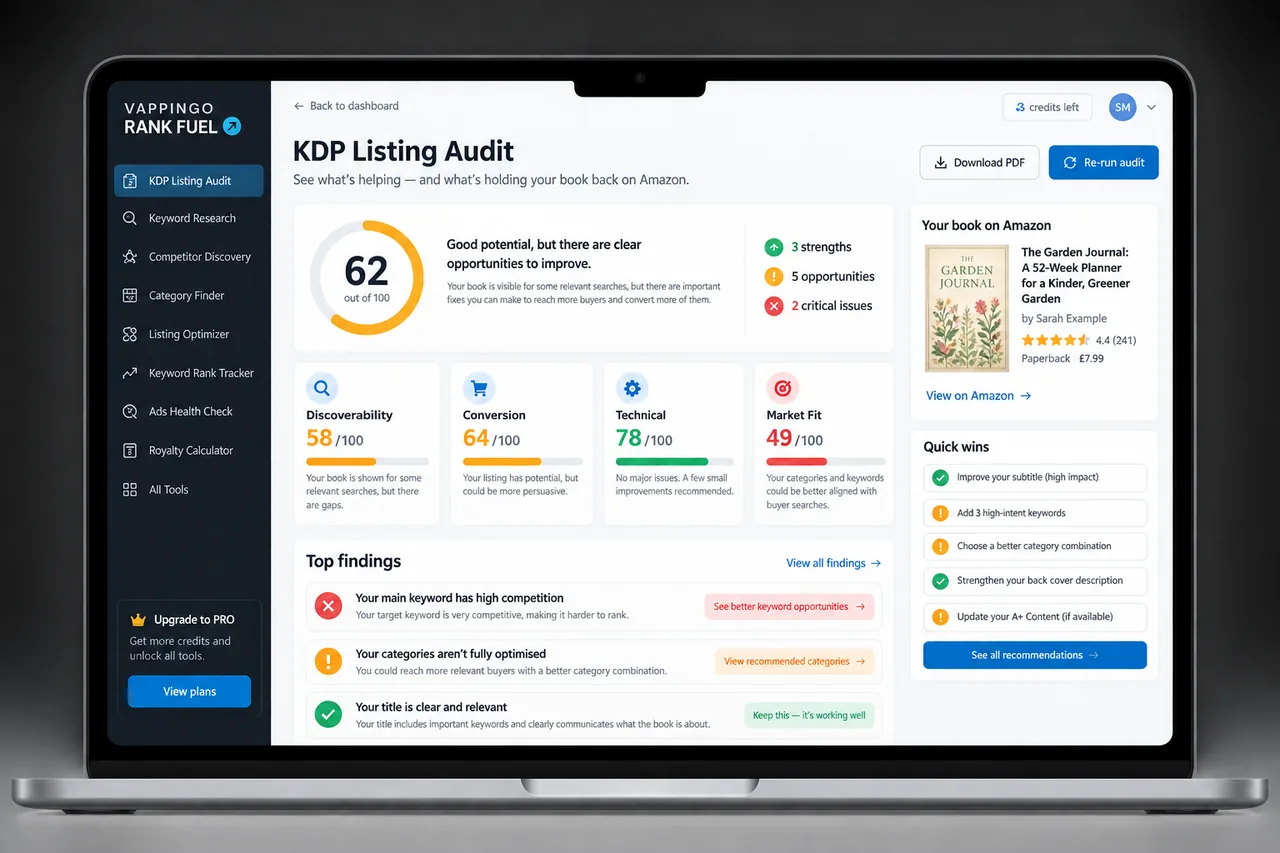
| Listing Audit | Diagnose whether the live listing is the broken gate. |
| Keyword Rank Tracker | Identify phrases whose current visibility should be protected. |
| Listing Optimizer | Carry Preserve and Improve keyword intentions into a controlled live-listing rewrite. |
A Before-and-After Diagnosis Example
Imagine a practical nonfiction book that ranks for several relevant searches and receives paid clicks, but sales remain weak. The old description opens with the author’s background, spends two paragraphs explaining why the topic is important, and only later tells the reader what the book helps them do. That is a credible description problem because traffic is already reaching the page.
The rewrite should move the reader problem and outcome to the opening, make the contents concrete, and remove biography that does not help the purchase decision. If sales remain weak afterward, the next diagnosis may move to cover, price, reviews, sample, or the product itself rather than rewriting the same description for a third time.
A Fiction Rewrite Needs a Different Test
For fiction, a description can fail by sounding like a synopsis rather than an emotional promise. A paragraph-by-paragraph account of the first act may be accurate but gives the shopper no clear reason to care. The rewrite should surface the protagonist’s desire, the force opposing it, and the cost of failure while preserving enough unanswered tension to make the sample attractive.
Do not import nonfiction benefit bullets into every novel. Match the copy architecture to the market. The description has to feel like the kind of reading experience the cover is already promising.
Preserve the evidence
- Save the current description and change date
- Record price, categories, and major ad settings
- List important search phrases currently showing visibility
- Check the rewrite against KDP’s prohibited-description content
- Change one major listing variable at a time where practical
- Wait for the update to propagate before drawing conclusions
Frequently Asked Questions
Does KDP show product-page views for every book?
No universal KDP Reports metric gives every author organic product-page views and conversion rate.
How long can a KDP description be?
Up to 4,000 characters, including HTML characters used in the description editor.
Can I put reviews in my book description?
No. KDP’s current metadata guidelines prohibit reviews, quotes, and testimonials in the description.
Can I put backend keyword phrases in the description?
KDP specifically prohibits keyword or book-tag phrases. Use natural language that accurately describes the book.
How long does a description update take?
KDP currently says description updates can take up to 72 hours to appear.
How do I know if the description is the problem?
Relevant ad clicks with weak attributed sales are stronger evidence of a product-page issue than low sales alone. Review cover, price, reviews, sample, and description together.
Rewrite the Broken Part, Not the Entire Publishing System
A description is highly editable, which makes it tempting to blame. Diagnose first, preserve what is working, and make the rewrite answer the reader’s actual reason for hesitating.