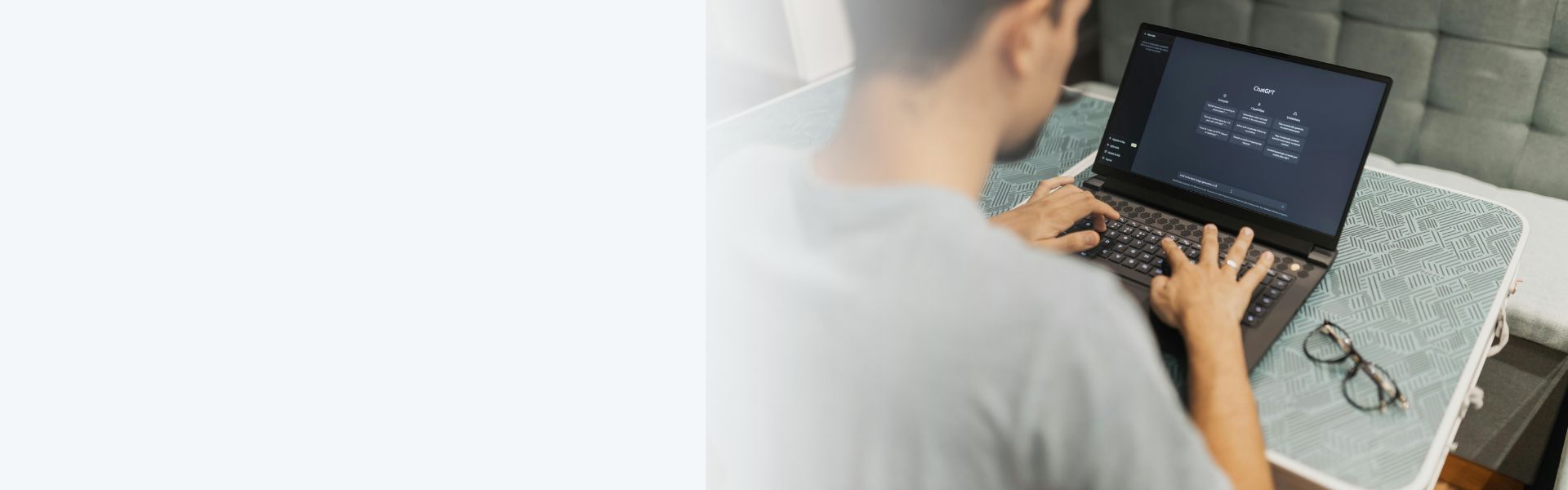
Can AI Proofreading Leave a Watermark? ChatGPT & Gemini Watermarks Explained
You wrote every word. ChatGPT just polished the grammar. Could those final corrections leave an invisible AI watermark in work that was originally yours?
Imagine writing a research paper entirely yourself, then handing it to ChatGPT for one last grammar check. You are not asking it to invent an argument, find sources or write your conclusion. You simply want the sentences to read more smoothly.
Ten minutes later, you have a polished version. You paste it into Word, save the file and prepare to submit.
But what if the final wording contains a statistical signal left by the AI system? Could a university mistake AI-assisted editing for AI authorship? And would it be able to tell the difference?
Text watermarking is no longer purely theoretical. Google uses SynthID for supported Gemini text; Anthropic has introduced watermarking in supported Claude models; and OpenAI announced textGrain in October 2026. The important question, however, is not simply whether these technologies exist. It is how much wording the model generated, whether that output was watermarked, and what a detectable signal would actually mean.
Here’s what students and researchers need to understand before asking generative AI to proofread their original work—and why a transparent human-editing process may be preferable at the final stage.
Can AI Proofreading Leave a Watermark? The Short Answer
Yes, AI proofreading can introduce watermarked wording into writing you originally produced yourself—but it does not happen in every case, and a watermark is not necessarily detectable.
The outcome depends on the AI provider, the specific model and product, when and where the output was generated, the amount of new wording, and how the text was subsequently edited. A system that merely identifies mistakes without writing your replacement sentences is different from one that rewrites five pages of your essay.
Anthropic puts the grammar-checking limitation plainly: if Claude changes only a handful of grammar and punctuation errors, there may be too few new word choices for its watermark detector to register a signal. OpenAI likewise says text watermarks cannot distinguish whether a model generated an entire passage or processed text that a person supplied. See Anthropic’s watermarking explanation and OpenAI’s text provenance announcement.
What Is an Invisible AI Text Watermark?
When a language model generates a response, it chooses successive words or word pieces, known as tokens, from several possible options. Some text-watermarking systems subtly alter those choices according to a hidden statistical pattern. Across enough generated wording, a compatible verifier can look for that pattern.
This is not a hidden sentence, a tracking pixel or a secret space character sitting in your Word document. The signal is associated with the wording the model generated. It normally does not identify the user, the account, the prompt or the original author of the ideas.
The words themselves can carry the signal
An AI system might choose “The results indicate a relationship” where another equally natural choice would be “The findings suggest an association.” A watermarking scheme can influence many small choices like these without adding visible symbols. A detector looks for the pattern across a passage rather than identifying a single suspicious word.
Watermarking should also be distinguished from file metadata. A Word document’s author field, revision history or creation date does not automatically reveal a statistical text watermark. For a fuller explanation, see Can AI-Written Text Really Be Watermarked?
Three Ways to Proofread with AI—and Why They Differ
Consider three approaches to polishing the same original essay. All three might be casually described as “using AI to proofread,” but the model’s contribution to the final wording is different.
Feedback only
You ask AI to identify grammatical problems or unclear sentences without rewriting them. You decide what to change and type the revised wording yourself. The model has not necessarily generated the final prose.
Minor corrections
You accept a few AI-proposed corrections to punctuation, agreement or word choice. Some replacement wording comes from the system, but the changes may be too limited for a reliable statistical text-watermark detection.
Full-paragraph rewriting
You ask the system to make your writing more fluent, formal or persuasive, and paste back complete rewritten paragraphs. Substantially more wording is model-generated, increasing the possibility of a detectable watermark where a supported scheme is active.
The third workflow also creates an academic risk that has nothing to do with watermarking: the revised text may say something subtly different from your original. It could strengthen a cautious finding, replace discipline-specific terminology or alter the scope of a claim.
Importantly, more rewriting does not guarantee a positive watermark result. Some models and routes do not apply the same watermark, and extensive later transformations may weaken a signal. The scenarios describe different levels of model involvement, not guaranteed detector outcomes.
ChatGPT, Claude and Gemini: Which Text Can Be Watermarked?
As of November 2026, provider coverage differs. It is misleading to claim that every ChatGPT, Claude or Gemini response has the same invisible watermark.
| AI provider | Text watermarking position | What that means for proofreading |
|---|---|---|
| ChatGPT / OpenAI | OpenAI announced textGrain on 5 October 2026. It described a phased rollout to eligible ChatGPT and Codex text outputs in the European Union, plus opt-in watermarking for supported API models globally. | Eligible output may carry a statistical signal. Do not assume every ChatGPT account, older response, model or geography is covered. The UK is not automatically included in an EU-specific rollout. |
| Claude / Anthropic | Supported newer Claude models carry text watermarks across supported products and regions; coverage for older models differs. Detection is available through a restricted preview rather than a universal public essay checker. | Anthropic specifically notes that a few grammar corrections may not contain enough changed wording for a reliable detection, while longer generated passages offer more opportunities for a signal. |
| Gemini / Google | Google DeepMind says its SynthID system watermarks text generated through the Gemini app and web experience by influencing token-selection probabilities. | Copied Gemini-generated passages may retain the statistical pattern. Google’s public Gemini verification interface is documented for images, video and audio—not as a general paste-an-essay text checker. |
For the current technical and rollout details, consult OpenAI’s textGrain announcement, Anthropic’s model-coverage guidance and Google DeepMind’s SynthID overview. We also maintain a provider-by-provider guide to AI text watermarking.
These are evolving systems. The model and product route matter as much as the brand name on the chatbot’s homepage.
Does Copying AI-Edited Text into Word Remove a Watermark?
No—not merely because the text has been copied. If a model has generated wording that contains a statistical watermark, pasting the same words into Word, Google Docs or a PDF does not automatically change the word choices that carry the signal.
Changing the font, margins or filename is therefore different from changing the actual wording. But even unchanged text may not produce a reliable positive check if the passage is short, the watermark was never embedded or a detector lacks compatible access.
Editing can affect detection too. Google says SynthID Text can retain some signal after small alterations but that substantial rewriting or translation can reduce detector confidence. OpenAI has published its own evaluation showing that replacing words in a watermarked passage can sharply reduce detection. Neither result means rewriting is a legitimate way to conceal prohibited AI use. See Google’s limitations.
Could a University Actually Detect the Watermark?
That is a separate question from whether the watermark exists.
A provider must first embed a supported signal. Then somebody needs access to a compatible verifier and enough suitable text to interpret its output. OpenAI opened applications for its textGrain detector to approved researchers and expert organisations, not general public uploads. Anthropic describes text-watermark detection as a private preview for eligible organisations. Google publishes SynthID Text developer technology, but that is not the same as a universal consumer checker for arbitrary student essays.
Some universities may have access to additional tools or may obtain evidence through other channels. There is no sound basis, however, for assuming that every lecturer can paste any Word file into a chatbot and see a definitive list of watermarked sentences.
Was a mark embedded? Can it be verified? What does it prove?
Embedding depends on the model and output. Verification depends on a suitable detector, access and enough detectable signal. Academic misconduct depends on the actual editing process and the assessment rules—not just a technical result.
For an explanation of how universities may consider detector reports alongside writing history, drafts and authorship discussions, read Can a University Actually Prove You Used AI?
Why a Turnitin AI Score Is Not a Watermark Check
Students often use the phrase “AI detection” to mean two quite different technologies.
| Conventional AI-writing detector | Text-watermark verifier | |
|---|---|---|
| What it asks | Does this finished text resemble writing the model associates with AI? | Does this passage contain a compatible signal deliberately embedded during generation? |
| What it needs | Text to classify, even from an unwatermarked generator | Text from a supported generating system and a compatible verifier |
| Can it make mistakes? | Yes; false positives and false negatives can occur | Yes; false positives, missed signals and inconclusive results remain possible |
| Does it identify a student? | No | No, not ordinarily |
| Does it prove misconduct? | No | No |
Turnitin says its AI Writing Report can misidentify human-written, AI-generated and AI-paraphrased text and should not be used as the sole basis for adverse action. Its public report documentation describes text classification, not a general verifier for OpenAI’s textGrain, Claude’s watermark or Google’s SynthID. Read Turnitin’s guidance.
If you want the technical distinction in more depth, see AI Watermarks vs. AI Detectors.
Worked Example: One Student Essay, Three Different Edits
Imagine a student who has independently researched whether an educational intervention improved attendance. Her original draft reads:
“Attendance was higher in the intervention group, although the difference was not statistically significant and the study could not establish a causal relationship.”
Approach A: Request feedback without rewriting. The student asks, “Identify any grammatical issues, but do not rewrite this sentence.” The tool might suggest checking the hyphenation of “student-reported” elsewhere or point out that another sentence is ambiguous. The student decides what to do and makes her own edits. No model-generated replacement of the sentence is required.
Approach B: Accept a narrow correction. The tool returns almost the same sentence with a small punctuation change. Even if the supported system applied watermarking during its response, the final accepted change may contain too little newly generated wording for a reliable signal. That is a possibility, not a guarantee.
Approach C: Accept a fluent rewrite. The tool proposes: “The intervention significantly improved attendance, demonstrating its effectiveness.” This version sounds confident and concise—but it now misstates the statistics and implies a causal result the study could not show. If the system generates substantial replacement text, a supported watermark may also be present.
These examples are illustrative, not results from a live detector test. Their purpose is to show the two separate risks of extensive AI rewriting: the wording may carry a provenance signal, and the academic meaning may change.
Is AI Proofreading Allowed at University?
It depends on the institution, the assessment and the degree of assistance. Do not assume either that all grammar checking is automatically allowed or that any AI involvement is prohibited.
For example, UCL’s current Language and Writing Review guidance distinguishes minor corrections from more extensive changes to meaning. It identifies spelling, punctuation and layout corrections as generally acceptable; clarity and style changes require care; and substantive additions or alterations to academic content are generally unacceptable. UCL also says specific programme or assessment rules can take priority.
That is a useful framework, not a rule you can apply automatically to every university. Some assessments test language skills directly. Some universities have stricter provisions for external proofreading. Others may explicitly allow broader AI-assisted writing tasks with disclosure.
Remember that a watermark is not a misconduct verdict. Even if a verifier finds compatible AI involvement, it cannot establish whether the student used the tool to brainstorm, correct language or generate prohibited assessable content. Conversely, the absence of a signal does not make an otherwise prohibited workflow acceptable.
The Risks Beyond Watermarking
Invisible watermarking is a reason to think carefully about final-stage AI editing, but it is not the only concern—or necessarily the most consequential one.
1
Changed meaning
An apparently elegant rewrite may turn “associated with” into “caused by,” remove an important qualification or misstate the strength of the evidence.
2
Incorrect academic details
AI may alter citation wording, technical terminology, sample characteristics or descriptions of methods without recognising the consequences.
3
Unclear editing history
Replacing a whole passage with a model’s rewritten output makes it harder to see exactly which corrections were necessary and which changes were stylistic inventions.
4
Confidentiality
Uploading unpublished research, client information or identifiable participant data may conflict with ethics approval, consent terms or institutional data-handling rules.
For essays, accuracy may hinge on a carefully qualified argument. For scientific research papers, it may hinge on the difference between a statistical association and a causal claim. A model that makes a sentence sound more authoritative has not necessarily made it more correct.
A More Transparent Final-Editing Workflow
Whether you use authorised AI assistance, a human proofreader or a combination of permitted tools, the goal should be an editing process you can explain.
Keep the intellectual work—and the final decisions—yours
- Check the rules first. Confirm what your assessment allows and whether any AI or third-party editing must be disclosed.
- Keep a working copy. Preserve the original draft, notes, sources and any useful version history.
- Separate diagnosis from rewriting. If AI feedback is allowed, consider asking it to flag unclear passages rather than generate replacement paragraphs.
- Review meaning line by line. Check that corrections preserve your claims, data, terminology, references and intended degree of certainty.
- Make editing visible. Where appropriate, use Track Changes or retain a comparison between the original and revised files.
- Describe the help accurately. Make required declarations about tools, tasks and the extent of their contribution.
A record of edits is useful context, not an infallible proof of human authorship. Its value is that you can see how the document changed and explain which decisions you made.
What Human Proofreading Does Differently
If you have already researched and written your essay, dissertation or research paper, you may not want the language to be generated again. You may simply want an experienced reader to identify errors, check consistency and flag wording that is ambiguous.
A professional human proofreader can work with your existing Word file, using editorial judgement to propose limited corrections and comments rather than producing a fresh model-generated version. With Track Changes, you can inspect each change, reject anything that alters your meaning and keep the original text alongside the revised version.
This distinction matters for watermarking: a human-only editing service does not introduce a new text watermark through generative AI replacement prose. It does not follow that human proofreading can remove a watermark already present in the manuscript, guarantee a particular detector result or make a disallowed level of third-party assistance permissible.
For longer research projects, see our dissertation proofreading service and AI vs. Human Proofreading for Dissertations.
When Is a Human Proofreader the Better Choice?
A human review is especially valuable when the cost of an inaccurate correction is high: before submitting a thesis, sending a manuscript to a journal, completing a major assessed research paper or preparing a statement that must remain in your own voice.
| What you need | Why human proofreading can help |
|---|---|
| Preserve a cautious finding | An editor can flag potentially overstated language for your decision rather than automatically making the claim stronger. |
| Keep specialist terminology | A reviewer can check term consistency in context and query unusual usage rather than simplifying it reflexively. |
| See exactly what changed | Tracked revisions make individual changes reviewable and help preserve an understandable editing record. |
| Avoid another generative rewrite | The editor can work directly on your original prose without introducing new model-generated passages. |
Human editing is not a replacement for fact-checking, supervision or the author’s research responsibilities. A responsible proofreader can flag a questionable statistic or ambiguous claim; the researcher remains responsible for verifying and correcting the academic substance.
Should You Declare AI Proofreading or Human Editing?
Follow your university’s required declaration or acknowledgement process. Some institutions distinguish AI assistance from third-party proofreading; others ask students to record both. A declaration should describe what actually happened, rather than using a vague phrase such as “AI was used for grammar.”
Be precise about the assistance
AI feedback example: “I used [tool] to identify grammatical and clarity issues in my draft. I reviewed the feedback and made the revisions myself. I did not use the tool to generate my analysis or conclusions.”
Human proofreading example: “A professional human proofreader reviewed the language and presentation of my completed draft. I reviewed the proposed changes, and the research, analysis and academic conclusions remain my own.”
Do not use either sample if it leaves out relevant assistance. If you accepted rewritten AI paragraphs, a statement implying that the model only pointed out errors would be inaccurate. For more examples, see Sample AI Use Declarations for Dissertations.
Before Uploading a Paper: Check Confidentiality
Unpublished manuscripts, confidential company research, participant transcripts and identifiable health or personal information may have restrictions beyond academic integrity. The fact that a chatbot can accept a document does not mean your institution or research ethics approval permits uploading it.
Check the privacy terms and approved processing arrangements for any tool or editor. Where an institution requires approved systems or prohibits external sharing, follow those requirements first. An anonymised excerpt is not automatically safe if the surrounding details can still identify someone.
Frequently Asked Questions
Can ChatGPT add an invisible watermark when it corrects my grammar?
It is possible for supported ChatGPT output to contain a statistical text watermark, but not every ChatGPT response or geography is covered. OpenAI’s textGrain rollout began in October 2026 for eligible EU ChatGPT and Codex text, with opt-in coverage for some API models. A few minor corrections may not yield a reliably detectable signal. A watermark cannot tell whether the model was editing text you wrote first.
Will Grammarly or another AI grammar checker watermark my paper?
Do not assume that every tool marketed as an AI grammar checker applies a statistical text watermark. Coverage depends on the provider, model and feature. Basic spelling correction, generative rewrites and AI-assisted suggestions are also different functions. Check the product’s current documentation and your assessment rules rather than assuming the answer is the same for all writing tools.
Can Claude watermark writing I originally created?
Supported Claude models watermark generated text. If you ask Claude to rewrite your original wording, the output may contain a text watermark. Anthropic says that a grammar-and-punctuation-only pass may introduce too few new word choices for a detector to register a reliable signal. That does not mean all Claude proofreading is unwatermarked.
Does Gemini leave a watermark on edited essays?
Google says SynthID is used to watermark text generated through the Gemini app and web experience. Whether an edited essay contains a detectable SynthID signal depends on how the output was generated, how much wording changed and whether a compatible detector can identify the pattern. Read our SynthID guide for details.
Does pasting AI-edited writing into Word remove the watermark?
Not automatically. Text watermarks are associated with patterns in the generated wording, not simply the file’s formatting or ordinary document metadata. Copying the same words into Word does not itself change those patterns.
Can Turnitin tell whether my paper contains a textGrain or SynthID watermark?
Turnitin’s publicly documented AI Writing Report classifies writing using its own detection system. It is not described as a general verifier for OpenAI’s textGrain, Google’s SynthID Text or Anthropic’s Claude watermark. A Turnitin AI percentage is not equivalent to a positive provider-watermark check.
Can a university prove I used AI just because a watermark was found?
A reliably detected watermark may support the conclusion that a compatible AI model generated or processed some wording. It does not identify who used the model, how much was human-written or whether that use was prohibited. The assessment rules and evidence about the actual process still matter.
Is it safer to use a human proofreader?
Human-only proofreading avoids introducing new model-generated wording through the proofreading service and can provide visible tracked changes for review. It does not guarantee that AI detectors will never flag original text, remove existing watermarks or override university restrictions on third-party assistance.
Does human proofreading need to be declared?
Sometimes. Policies differ, and some institutions require acknowledgement of third-party assistance even when it is permitted. Check the assessment handbook and distinguish human proofreading from AI use accurately.
What if I have already used AI to rewrite parts of my research paper?
Keep the original and revised drafts, identify the passages and tools involved, check the assessment or journal policy, and seek appropriate guidance if the use may exceed permitted limits. Do not fabricate a writing history or assume that further paraphrasing resolves an academic-integrity issue.
Your Research. Your Words. Your Final Decision.
When you have written an essay or research paper yourself, the last thing you need is uncertainty about who made the final wording decisions.
Text watermarks are one reason to think carefully before handing an entire finished draft to a generative model. A compatible model may leave a statistical signal in the words it returns, and that signal may not reveal whether the model supplied the argument or simply polished its expression. But watermarking is not universal, verification is imperfect, and academic-integrity decisions require more than a detected pattern.
The stronger principle is simple: keep ownership of the intellectual work, understand the editing rules and choose a final-review process whose changes you can explain. If you only need professional language support, a qualified human proofreader can work with the writing you have already produced rather than generating it again.
You’ve done the research. Let the final edit respect it.